
Beneath the vibrant sunsets and between the perfectly manicured lawns of Florida’s richest neighborhoods, a remarkable economic phenomenon is taking place.
It’s not about hedge fund managers or real estate moguls; instead, it’s the housekeepers of these affluent families who are at the forefront of this narrative.
These critical yet often overlooked members of household staff are now commanding salaries up to $150,000 a year.

What’s driving these astonishing figures is an influx of millionaires relocating to the Sunshine State, turning the market for domestic help on its head.
In a place once known for its retiree communities, the Sunshine State has become the new frontier for America’s wealthy elite – and the servants required to maintain their lavish lifestyles.
In the past, housekeeping was often seen as humble work, paid by the hour at rates that barely budged year-over-year.
Today, however, the economics of the job have transformed dramatically, making it a lucrative career option for many.
This shift is deeply intertwined with the larger demographic and economic changes occurring across Florida, as the state not only continues to attract retirees but also increasingly, some of the nation’s wealthiest individuals.
The Migration of Millionaires

The influx of millionaires to Florida is not a new story, but its pace has accelerated in recent years.
Drawn by more than just the temperate climate and picturesque coastlines, these affluent individuals are also attracted to the state’s favorable tax policies.

Florida stands out in the United States as one of the few states without an individual income tax, making it an economically attractive haven for the wealthy, particularly those seeking to maximize their earnings and savings.
This trend has been catalyzed by shifts in workplace dynamics, especially the rise of remote work during the pandemic, allowing people to live wherever they choose without being tethered to office locations.

According to Census Bureau data, Florida saw an influx of over 91,000 New Yorkers in 2022 alone.
The presence of high-profile billionaires like Jeff Bezos and other corporate titans relocating to or expanding their bases in areas like Miami’s “Billionaire Bunker” and Palm Beach further underscores the state’s appeal to the uber-rich.
The effects of this migration are manifold, influencing everything from real estate prices to local economies.

But perhaps one of the most intriguing impacts is on the labor market for domestic staff, particularly housekeepers, whose services have become increasingly indispensable to the luxurious lifestyles of these millionaires.
The Housekeeping Gold Rush

With the increase in millionaire migrations comes a heightened demand for domestic help, pushing the salaries of capable housekeepers to unprecedented heights.
Staffing agencies across Florida, especially those operating in affluent hubs like Palm Beach, Miami, and Boca Raton, report a significant spike in wage offerings.
As the wealthy have flocked to Florida’s sun-soaked shores, a severe imbalance has emerged between the demand for elite domestic staff and the available supply of qualified candidates.
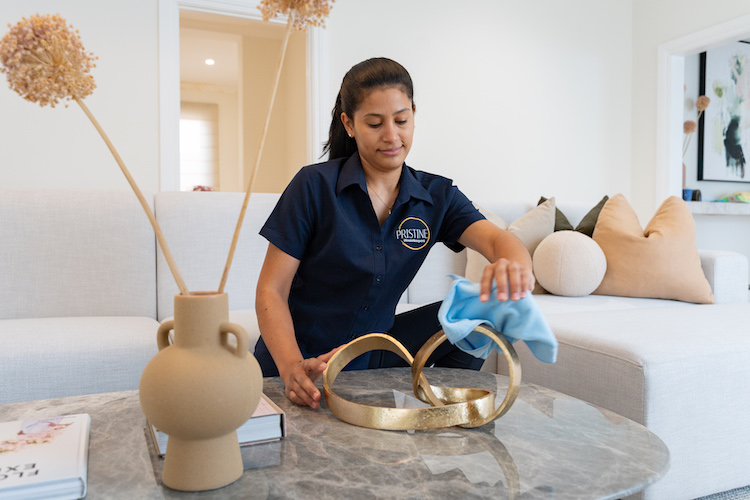
This scarcity has given rise to a fierce competition among homeowners vying for the most experienced and capable housekeepers, butlers, and estate managers.
What was once a modest hourly wage has escalated dramatically, with experienced housekeepers now earning between $45 and $50 an hour, translating to annual salaries upwards of $150,000.

April Berube, founder of The Wellington Agency, a firm specializing in placing high-end domestic staff, paints a picture of a market transformed.
“I have been placing staff for 30 years, and I’ve never seen anything like this,” she says.
In this rarefied world, discretion and attention to detail are not mere niceties but non-negotiable prerequisites. A housekeeper in these circles must be trained to navigate the intimate spaces of their employers’ lives with the utmost care and confidentiality.
The scarcity of skilled labor has led to fierce bidding wars among homeowners desperate to secure the best talent for maintaining their estates.
This competition not only inflates wages but also improves overall employment conditions, including benefits such as health insurance, retirement plans, and paid vacations—perks that were once rarities in this sector.

The skill set required for these high-paying housekeeping roles goes far beyond traditional cleaning. Employers are looking for individuals who can manage a large, often intricate household with precision and discretion.
This includes everything from caring for expensive art and antiques to managing other staff and orchestrating events.

“These are ultra-high net worth people who want the best, and they’re willing to pay for it,” explains Melissa Psitos of Lily Pond Services, another agency specializing in domestic staffing for the ultra-wealthy.
“If you have a home that’s worth $100 million, that’s an investment. They want smart people managing them.”
The complexity of these tasks makes experienced housekeepers highly valuable and explains why homeowners are willing to pay premium salaries for their services.

The story of Maria Lopez, a housekeeper in Palm Beach, illustrates the changing tide. Maria started her career over a decade ago, earning a modest wage typical of the industry at the time.
Today, she earns $150,000 a year, a salary that reflects not only her years of experience but also her specialized skills in managing high-end homes.
“It’s about understanding the specifics of each family, their home, and their needs,” Maria explains. “Every day is different, and the level of detail required in our work is something that takes years to master.”
Challenges and Opportunities
While high salaries in housekeeping might seem purely beneficial, this surge has also introduced new challenges.
With the severe shortage showing no signs of abating, staffing agencies have found themselves in a fierce battle to recruit, vet, and train candidates capable of meeting the exacting standards of their elite clientele.
The labor market for skilled domestic workers is now tighter than ever, creating a predicament for both staffing agencies and their clients.
April Berube, who has experienced this shift first-hand, explains, “For housekeepers, it’s wonderful. For us, it’s extremely difficult. We’re facing a severe shortage of qualified staff.”
This shortage is exacerbated by the fact that potential new entrants to the field cannot quickly acquire the necessary skills or experience overnight, leading to a gap that’s hard to fill immediately.

Furthermore, the shifting dynamics have had a ripple effect on other sectors.
Hotels and resorts in Florida, for instance, are finding it increasingly difficult to retain their cleaning and maintenance staff, who are tempted by the higher wages and often better working conditions in private employment.

This situation is particularly challenging during peak tourist seasons, when demand for services spikes.
As a result, some businesses are forced to increase wages or improve benefits to retain their employees, adding financial strain during already competitive times.
The Qualifications

So, what exactly qualifies a housekeeper for such a lofty paycheck? The answer lies in the rarified world of luxury domestic service, where discretion, attention to detail, and a keen understanding of the finer things are paramount.
“It’s not just cleaning,” explains Maria, a Nicaraguan housekeeper who has spent nearly two decades honing her craft in the luxurious homes of Palm Beach. “You have to learn how to handle everything properly – the artwork, the furniture, the clothes. It’s a skill, like any other profession.”
Maria’s journey to earning $120,000 annually, along with health benefits, a 401(k) plan, and overtime pay, has been a long and winding road. After years of working her way up, she now oversees the care of priceless antiques and ensures the household runs like a well-oiled machine.
“These families expect perfection,” she says. “They’re not just paying for our labor; they’re paying for our expertise and our discretion. We become part of their lives in a way that very few outsiders ever could.”
For Elena, a Colombian housekeeper who has worked for one of Palm Beach’s most prominent families for over a decade, the job is as much a privilege as it is a responsibility.
“They treat us like part of the family,” she confides. “We’re not just staff to them; we’re confidants, trusted advisors.”
Economic and Social Implications
The economic implications of this trend extend beyond individual households and businesses.
According to staffing agencies, housekeepers working for Palm Beach’s wealthy residents can now command hourly rates of $45 to $50 – a far cry from the $25 to $30 an hour that was once considered the high end of the pay scale.

As housekeeping wages rise, they feed into the broader economy, increasing consumer spending but also potentially contributing to inflation in local services.
These six-figure salaries would have been unthinkable just a few years ago, but they reflect the new reality of the cutthroat market for elite domestic staff. As more millionaires pour into the state, they’re bringing with them a level of affluence and exclusivity that demands a caliber of service once reserved for royalty.
Economists like Kenan Fikri, Director of Research at the Economic Innovation Group, suggest that this is part of a larger trend of wealth concentration in areas like Florida, which can have mixed effects on local communities.
“While it’s great for those who find these high-paying jobs, it can escalate the cost of living in a way that makes it harder for lower-income residents to afford living here,” Fikri notes.
Socially, the elevation of housekeeping to a high-paying, respected profession could help shift perceptions about domestic work, historically undervalued and underpaid.
It challenges the stigma associated with this type of work and highlights its critical role in supporting the lifestyles of the affluent and the smooth running of local economies.
The Future of Housekeeping in Florida

Looking ahead, the trajectory of Florida’s economy suggests that the demand for high-end housekeeping and other domestic roles will not wane anytime soon.
The continued influx of wealth into the state and the sustained interest in luxury living provide a stable foundation for the growth of this sector.
Moreover, as the standards and expectations for domestic help continue to rise, the market may see further stratification, with premium services commanding even higher prices.
Training and education programs might emerge as crucial tools in preparing a new generation of housekeepers who can meet these high standards.
Vocational schools and community colleges may begin offering specialized courses in household management, antique care, and other relevant skills that cater to the high-end market.
This would not only help alleviate the current labor shortage but also provide upward mobility for more workers.
Additionally, technology is likely to play an increasing role in this sector.
From smart home management systems that streamline household tasks to specialized training programs delivered via virtual reality, innovations could make high-quality housekeeping more efficient and less physically demanding, appealing to a broader workforce.
Conclusion
The story of Florida’s housekeepers earning up to $150,000 is a vivid illustration of how economic, demographic, and cultural shifts converge to reshape industries.
For these workers, the change has brought financial rewards and professional recognition that were unimaginable a decade ago.
It also offers a lens through which to view the evolving dynamics of work and wealth in America.
As Florida continues to attract both millionaires and those who serve them, the lines between service and luxury, necessity and extravagance, continue to blur, creating a labor market that is as dynamic as it is challenging.
In the golden dust of the Sunshine State, housekeepers aren’t just cleaning homes; they’re cleaning up financially, setting new standards for domestic work and redefining the value of labor in high-end markets.