Recent Posts

How Does Chime Make Money? Business Model of Chime


How Does Chime Make Money

Chime is a popular fintech platform that provides current and savings accounts in partnership with FDIC-insured banks.

Chime primarily makes money via interchange fees charged on card transactions. The company also makes money from out-of-network ATM fees.

Founded in 2013 by Chris Britt and Ryan King, Chime functions as an accessibility layer on top of traditional bank systems. It targets middle-income users with easy access to a variety of financial services. Chime exploded in popularity between 2017 and 2021, going from just 500,000 users to 12 million users.[1] The company’s services are especially attractive to customers who want a hassle-free online banking experience with no hidden charges.

One of Chime’s founding goals was to help people struggling with debt by offering charge-free services and smart payment analytics. To further this goal, it acquired Charlie Finance in 2021 for an undisclosed amount.[2] Chime is currently the most popular neobank platform in the United States, with over 12 million app downloads.[3]

What is Chime & How Does It Work?

Chime is a financial technology company that offers online banking services. It is not a chartered bank but offers its services through partnerships with Bancorp Bank and Stride Bank, both of which are FDIC members.

Unlike some fintech companies that aren’t FDIC members or affiliated with an FDIC member, the company insures deposits up to a maximum amount of $250,000. Chime also supports Visa’s zero liability policy which states that a cardholder won’t be responsible for unauthorized transactions made on their account.

Security is very important for Chime. The online banking service provider features two-factor authentication and fingerprint ID for maximum security.

Designed to be the most user-friendly online banking system, Chime makes sure that its customers never have to touch physical cash. Every single deposit, withdrawal, and payment can be done from a phone. Chime also supports direct deposit, so users can receive their paycheck directly in the Chime account.

To set up direct deposit, all users have to do is fill out a form and get it signed by their employer. This same system also allows Chime users to receive unemployment benefits. The main benefit of setting up a direct deposit to Chime is that users can receive their paycheck up to two days early.

That means that if their payment normally arrives on Friday, Chime users can get it on Wednesday. On top of that, Chime encourages good spending habits by giving its users the option to automatically allocate a fixed percentage of each paycheck. The percentage can be adjusted, and it will be deposited into a user’s Chime savings account.

Chime also has a feature called ‘SpotMe’, which covers overdrafts up to $200 entirely free of charge. Traditional banks usually charge around $35 for overdrafts, which adds up over time. Many customers are forced to close their accounts when they go into a negative balance.In 2020, it was estimated that banks made over $30 billion just from overdraft fees.[4]

But Chime users don’t have to worry about this because, for them, the cost is zero. This encourages guilt-free spending with a Chime debit card and results in satisfied customers.

For the SpotMe service, all a Chime user needs is a direct deposit account. Once the payment arrives from the employer, Chime will simply deduct the overdraft amount. This process is completely automated and hassle-free.

To use Chime, a user just needs to enter some basic details like their name, email, and residential address. Chime doesn’t require a credit check to issue its debit card and has no minimum balance requirements.

Chime has two types of accounts- a spending account and a savings account. The spending account works like a checking account in a regular bank. The savings account works like a normal savings account but with much higher interest rates.

Banks in the United States have an average Annual Percentage Yield (APY) of just 0.1%.[5] With Chime, users can expect an APY as high as 1.5% on their savings account. That is 15 times higher than the national average.

In addition to its excellent interest rates and streamlined banking experience, Chime also has a unique feature called a Credit Builder card. It is a special type of Visa card that doesn’t require any credit checks.

Credit Builder limits are set based on deposits to the Chime checking account. Any user who has received $200 or more via direct deposit is eligible. The card has no annual, international, or service charges.

Chime’s Credit Builder card helps users increase their credit score over time. This is an excellent feature for those who wish to rebuild their poor credit score or start a credit history from scratch. By using the Credit Builder card, Chime members might become eligible for better loan offers and interest rates from various lending partners.

It should be noted that Chime itself doesn’t offer loans. Nor does it have any credit partners integrated into the app. Chime’s Credit Builder card simply helps customers secure better loan prospects for the future.

While Chime is focused on a cashless transaction model, it does allow users to draw cash from ATMs when they need it. Chime has no physical locations. But it has over 60,000 fee-free ATMs across the country.

Users can withdraw cash with no out-of-network charges from Visa Plus Alliance, Allpoint, and Moneypass ATMs located near stores. Walgreens, 7-Eleven, CVS Pharmacy, and Circle K are some of the partner stores that offer Chime members free ATM withdrawals at their locations. Chime users can also transfer money to any bank account.

If the recipient isn’t a Chime member, they have up to 14 days to claim their money by entering their debit card details. The amount sent will then be instantly transferred into their bank account. Money can be sent by entering the recipient’s email or phone number.

The whole process is a lot more streamlined if both the sender and recipient are Chime users. Because Chime is such a flexible and easy-to-use fintech platform, it has over 12 million users. Of these 12 million, it is estimated that nearly eight million use Chime as their primary bank.[6]

That hasn’t been without controversy. The company has gained a bad reputation since the start of COVID due to increase fraud with its card. Car rental companies like Avis and Hertz have even banned the use of Chime cards to protect themselves against fraud.[7]


Business Model of Chime

Chime operates as a frontend for its FDIC-insured bank partners, who handle the actual deposits made by users. The goal of Chime is to acquire new users through its sleek interface and easy sign-up process. Around 70% of Chime’s new users join via referral.[8]

Once Chime has acquired a user, it offers them unique financial services that are not found with traditional banking apps. The company makes its money from interchange charges paid by merchants. Whenever a Chime user makes a payment at a store or e-commerce site using their Chime-powered Visa debit card, the merchant charges a transaction fee.

Each payment network charges different rates. For Visa, it typically ranges between 1.29% + $0.05 and 3.29% + $0.10.[9] This amount is then split between Visa and Chime.

The Chime debit card itself has zero monthly maintenance fees. Chime also doesn’t charge non-sufficient fund (NSF) fees and international fees. The average Chime user makes 50 transactions a month based on non-official estimates from 2019.[10]

Chime makes it convenient for its users to share money and pay online. Thus, they also increase the chance of a user making repeat transactions on their debit card. Once a user is satisfied with all the additional benefits offered by Chime, they tend to use it as their primary banking service provider.

By creating loyal customers who use Chime as their primary payment system, the company generates more money from interchange fees. Customers advertise the product in an organic fashion through referrals, and that’s how Chime acquires new users. Based on estimates, nearly eight million people use Chime as their primary bank.

In the United States, nearly 30% of people use some form of online-only banking service.[11] The share of neobank users has been rising, currently sitting at 9.5%.[12] Currently, nearly 25 million people using some kind of neobank but the market is growing.[13]

Chime is by far the most popular neobank app, holding nearly half of the entire userbase for this market category. It maintains a significant lead in user count over competing services such as Current and Varo.

Chime keeps on growing its market share by offering innovative features to customers. These include SpotMe overdraft protection, charge-free cards, and early salary payment.

The benefit of Chime over a traditional bank lies in its simplicity and user-centric design. Chime’s saving account offers far higher interest rates than a traditional bank. It also doesn’t require the user to maintain a minimum balance or pay maintenance fees on their account.

Because of its flexible nature and lenient membership rules, Chime has acquired a loyal userbase. Chime is one of the top 10 US banks going by the size of its customer base. Based on a 2021 report, it has more users than Truist and TD Bank.

The average age of a Chime customer is between 25 to 35 years. Chime users earn between $35,000 to $75000 each year.[14] The company’s target demographic is low to middle-income adults who don’t have a lot of disposable income and make several small purchases through online stores.

That’s how it maximizes the amount of money made from interchange fees. Chime also guides users into connecting its services with their employers. So, users receive their paycheck directly within Chime and gradually start treating it as their primary bank app.

Chime encourages smart financial decisions by providing analytics on spending, payment histories, and automated savings. Every time a user spends money on their Chime debit card, the app rounds off their transaction to the nearest dollar. Then, it sends the balance into their savings account.

For example, if a user purchases an item worth $1.50, Chime will deposit 50 cents to their savings account. This is a unique rewards system that encourages smart spending and saving at the same time. Chime also gives users the option to automatically segment a portion of their paycheck into the savings account every time they get paid.

By encouraging users to save money and make wise financial choices, Chime gets more longevity out of its target demographic. This results in more transactions, higher engagement with the app, and happier customers. Who then recommend Chime to their social circles.

Chime’s biggest rival is Revolut, as they offer similar services. Revolut is a more comprehensive fintech platform with support for businesses and international trading. It also has a slightly higher annual interest rate compared to Chime, topping out at 1.67%.

Revolut also supports international transfers, which usually arrive in the recipient’s account on the same day. However, Revolut keeps its best services and rewards behind a monthly subscription plan. In contrast, Chime’s Visa card is completely free.

Fewer people use Revolut, which means users can share money more seamlessly with Chime. The Chime app makes it extremely easy to send money to another Chime user.

Chime’s early salary feature is also superior, with payments arriving two days in advance. In comparison, Revolut only supports a one-day advance period.

Chime is a private company and does not release its financials. While the company is estimated to have annual revenue of around $304.7 million per year, it also has considerable expenses. These include things like staffing costs, hosting costs, platform costs, and development costs.

Due to the lack of data on Chime’s financials, it is unclear how profitable the company’s business model is.


How Does Chime Make Money?

Chime makes money from two different revenue streams. These include interchange fees and ATM fees.

Chime is a private company and doesn’t release any data on how much they make from each revenue streams. It is not publicly known how much the company makes from each revenue stream.

Interchange Fees

This is the primary source of Chime’s revenue. Whenever a customer purchases an item or service with Chime’s Visa debit card, the merchant pays a service fee to Visa. This service fee is then split between Visa and the card provider, which in this case, is Chime.

The rate of these fees can vary depending on the store type, card, and many other factors. Visa cards typically have an interchange rate between 1.29% + $0.05 and 3.29% + $0.10.

According to a 2020 estimate, Chime generated $208 in annual gross revenue from each user. Most of this came from interchange fees.[15]


ATM Fees

Whenever a Chime user makes an out-of-network ATM withdrawal, they incur a $2.50 fee. This is because Chime has to pay the ATM and bank networks.

However, Chime also makes a small profit on these fees. Based on a 2020 report, Chime got 21% of its gross revenue per user from ATM fees.[16]


Chime Funding, Valuation & Revenue

Chime is currently a private company, and its financials aren’t available to the public. Right now, it’s unclear what the company is valued at.

However, Chime raised $2.3 billion in funding over nine rounds between 2013 and 2021. Notable investors include General Atlantic, Tiger Global Management, Sequoia Capital Global Equities, and Softbank Vision Fund.[17] In its latest funding round led by Sequoia Capital Global Equities in 2021, Chime raised $750 million at a valuation of $25 billion.[18]

Annual revenue for Chime is estimated to be $1 billion a year as of 2021, according to a report by Forbes.[19] The article also said the company made around $600 million the year before. But there is no official data to verify this number. The company could be making more than that, based on the accelerated growth of fintech and online banking platforms in recent years.


Is Chime Profitable?

Chime is likely not yet profitable because it is still expanding and investing in growth. The company has continued to raise funds, including most recently in 2021. That suggests that Chime is not currently making enough funds to sustain its growth. That’s not surprising for a fintech company that typically requires significant capitalization for growth.

However, the company is likely generating a significant amount of revenue since Chime has been reported to be multiplying its revenue through successive fiscal years. In 2021, the company was estimated to have made $1 billion in total revenue. This is a 66% jump over the $600 million that they reportedly made in 2020.[20]

The company was planning to go public in March of 2022 but delayed their IPO due to the downturn in financial markets and the impact that has had on fintech companies. The company was expecting to have a valuation between $35 billion to $45 billion in their IPO.[21] It is currently focused on increasing its revenue streams and reaching new markets by offering better services to users.


Conclusion

Chime has an impressive business model, but they’re not done yet. They’re going to continue to expand their product offerings and grow their user base as they reach out to new customers.

In the meantime, we think it’s important to understand how this new financial technology model is going to affect the way we do banking. It’s already clear that the financial industry will never be the same—and it’s time for us all to embrace what that means.

We’re really excited about how the industry is shaping up and can’t wait to see what happens next!

Thanks for reading and following along.

How Does Credit Karma Make Money? Business Model of Credit Karma

511 Innovative Fintech Company Name Ideas

How Does Zelle Make Money? Business Model of Zelle

How Does Splitit Make Money? Business Model of Splitit

Sources

  1. Statista
  2. Chime
  3. Insider Intelligence
  4. CNBC
  5. CNBC
  6. Forbes
  7. Forbes
  8. Visa
  9. The Ascent
  10. Forbes
  11. The Financial Brand
  12. Statista
  13. Statista
  14. Forbes
  15. Axios
  16. Axios
  17. Crunchbase
  18. Forbes
  19. Forbes
  20. Forbes
  21. Forbes

How Does Webull Make Money? Business Model of Webull


How Does Webull Make Money

Webull is a popular online trading and portfolio consolidation app that allows users to trade in stocks and crypto. The platform also focuses on teaching its userbase about investing.

Webull primarily makes money via payments on flow orders. The company also makes money from subscriptions, loans to short sellers, interest on free credit balances, and margin interest.

Founded in 2017 by Wang Anquan, Webull was created with the goal of being an online trading platform for advanced users. It aims to simplify the process of trading with cutting-edge technologies while also boosting profits for individual users.

Webull’s holding company is Chinese, but the company is headquartered in New York.

The trading platform rapidly gained popularity after its mobile app launch in 2018. In 2021, NBA teams Brooklyn Nets and New York Liberty entered into a promotional agreement with Webull and sported its logo on their jerseys.[1]

What is Webull & How Does It Work?

Webull is a fintech platform that provides commission-free trading of various financial commodities. Users can trade stocks, options, exchange-traded funds (ETFs), and various other securities. To make trading more accessible for everyone, Webull also allows users to buy fractional shares.

With fractional shares, users can buy partial shares down to a minimum purchase value of $5. This is useful for investing in high-value stocks that typically trade at hundreds or even thousands of dollars. ETF shares can also be purchased via this method.

Like many other online brokerages, Webull doesn’t charge a commission for buying or selling. It also doesn’t impose any minimum balance requirements. However, users who are interested in margin trading must have at least $2,000 in their deposit account.

Webull provides advanced data and analytics for knowledgable investors. On Webull, users get free real-time stock quotes in addition to detailed graphs. These graphs have multiple technical indicators that can be toggled on or off based on user preferences. With Nasdaq TotalView, Webull also offers what’s known as Level 2 quotes on stock prices.

Level 2 quotes allow users to see the top 50 levels of bid and ask prices for any security listed on Nasdaq, New York Stock Exchange (NYSE), and other regional exchanges. This is a feature intended for serious traders who desire top-tier market insight. Currently, Webull offers a month of Nasdaq TotalView access for free to all new registrants on its platform.

In addition to technical indicators on, Webull also displays financial forecasts for each stock. When a user opens the ‘financials’ tab for a company, they can view its income statement, balance sheet, and cash flow. Each stock also has a comment section where app users can provide their own insight into the performance and future of the stock.

The interactive social aspect of Webull makes it stand out from the competition by offering users valuable market insights and feedback from other investors. Webull further boosts app engagement by providing users with a voting function for each stock. With this, users can vote on whether a stock’s future is looking bullish or bearish.

News articles and press releases are also integrated into the app and curated for each individual stock. By providing this level of functionality within their app, Webull gets loyal users who spend more time inside their app. Comprehensive coverage of all investment media ensures that users are less likely to install apps or get services from competitors.

Investors can get all relevant information for a stock without having to use separate services for things like news, analytics, or reviews. By encouraging its investors to spend their money wisely and providing them with a wide selection of market analytics, Webull generates a significant number of returning users. It functions as a one-stop solution that is both accessible and comprehensive at the same time.

Webull is designed with a mobile-first approach. It appeals to casual, as well as active traders. Based on data from 2021, Webull is the second most popular online trading app after Robinhood, with over 2.6 million monthly active users.[2] Webull, however saw a 265% in year-over-year user growth.


Business Model of Webull

Webull offers an all-in-one trading solution for savvy investors in the early to middle adult demographic. It attracts new users by offering commission-free trading and financial analytics within its app. Users can trade a wide variety of commodities, including fractional shares and over-the-counter (OTC) securities.

Webull’s business model is focused on providing indispensable trading analytics and services to attract advanced and sophisticated traders. They provide trading options that many other platforms don’t allow due to their advanced nature or complicated processing.

For example, the app offers crypto trading services which makes it attractive to a very wide userbase. To make sure customers don’t get overwhelmed by the vast array of options and features, Webull has paper trading. This is a type of simulated trading experience that allows users to experiment with virtual currency and polish their skills.

People, therefore, use Webull to learn and experiment with trading in new markets or investment instruments. Webull is seen, not just as a trading app, but as a place to learn and practice trading.

The social nature of the app is also a key part of Webull’s business strategy. It takes builds on the success of trading communities like The Motley Fool, Seeking Alpha, and Reddit’s trading forums to provide a social experience where traders learn from each other and share their thoughts.

That focus on investor education and its social features are what separates Webull from competing services like Robinhood. Webull offers the best analytics and technical indicators of any mobile trading app. It features a professional-tier feature set that’s tucked away behind a streamlined user interface.

Webull’s biggest rival is Robinhood, as they offer similar services. Where Webull and Robinhood differ is in their user experience. Robinhood is more popular, with over 7.3 million users according to a 2021 survey.[3]

However, Robinhood lacks a paper trading system which is an indispensable tool to make newcomers feel comfortable and confident.

Robinhood is better for first-time traders who want a clean user interface with minimal confusion. Robinhood also has a larger range of stocks and ETFs that are available through fractional shares.

Webull’s financial analytics and social features make it a more advanced platform. The in-app comment section and voting system help drive customer engagement. This cultivates more serious users who regularly spend lots of time on the app and make more trades – driving revenue for Webull.

The average Webull trader is 40 years old and has an account balance of $4,000.[4] Webull traders also tend to be more active and experienced compared to Robinhood traders.

Webull has a library of investment guides, resources, and tutorials on its website. These are all free to view, and available under the ‘learn’ tab.

Webull is estimated to have annual revenues of around $32.6 million per year, but it also has considerable expenses.[5] These include things like staffing costs, hosting costs, platform costs, and development costs.

There is no data on the financials of Webull, as it is a private company. It is hard to speculate on Webull’s exact operating costs.


How Does Webull Make Money?

Webull makes money from five different revenue streams. These include payments on order flows, subscriptions, loans to short sellers, interest on free credit balances, and margin interest.

As Webull is a private company, details about how much revenue they generate from these different revenue streams aren’t public.

Payments On Flow Orders

This is one of the biggest revenue streams for Webull. Whenever a user places a buy or sell order via Webull, the transaction is handed to a market maker. These market makers function as wholesalers for securities and pay Webull for bringing in order flow.

Market makers earn their profit through bid-ask spread. Which is the difference between rates for sale (bid) and buy (ask) orders. Webull is paid depending on how many securities are traded from one investor’s account to the other within a second.


Subscriptions

Webull encourages highly active traders to purchase a NASDAQ TotalView subscription for better market analytics and insight. TotalView also includes Level 2 quotes, net order imbalance indicator (NOII), and various other features. New users get a month of TotalView for free, after which it costs $1.99 per month.

While Webull has to pay NASDAQ for licensing, the company makes money on the difference between what NASDAQ charges and what users pay.


Loans To Short Sellers

Short sellers on Webull are loaned shares equivalent to a specific dollar amount. They are then charged interest on the borrowed shares. For short selling, traders must have margin accounts.

The trader anticipates a drop in the share value on the market. When it drops, they sell their shares. During this entire time, they pay interest to Webull until the short position is closed.

That happens when the trader buys back shares at, hopefully, a lower price and returns the shares that they borrowed to Webull.


Interest On Free Credit Balances

Free credit is the amount of cash in a trader’s margin account that Webull can withdraw on demand. Free Credit balance is the amount left after accounting for margin requirements and transactions, that is free to be invested.

Webull doesn’t pay any interest to the trader on this balance. But it loans out the money to banking partners who pay interest, helping Webull make a profit from the money they hold in accounts on behalf of their customers.


Margin Interest

Margin trading is when a customer borrows money from the brokerage to pay for trades that wouldn’t be possible with their current balance. Webull requires a minimum balance of $2000 in a user’s account before they’re eligible for margin trading. With margin trading, users get up to four times buying power on day trades and two times buying power on night trades.

Webull charges a variable interest rate depending on the amount borrowed by a user to leverage their trades. For debit balances up to $25,000, the annual margin rate is 6.99%. It goes down to 3.99% for amounts above $3 million.


Webull Funding, Valuation & Revenue

Webull is currently a private company, and its financials aren’t available to the public. Right now, it is unclear what the company is valued at.

However, Webull raised $224 million in funding over five rounds between 2016 and 2021. Notable investors include Shunwei Capital Partners, Hongdao Capital, Lightspeed Venture Partners, and Lightspeed China Partners. The company’s latest funding round was a series D round in February 2021, which raised $150 million.[6]

Webull’s last disclosed valuation was $1 billion when it raised money through a series C funding round in 2021.[7] Since then, the company hasn’t had any more funding rounds. However, given the 2022 downturn in the value of fintech companies, there is a chance that Webull’s valuation could have slipped.

Annual revenue for Webull is estimated to be around $32.6 million.[8] But there is no official report to verify this. Given the recent dip in the number of online trading users, it is possible that Webull could be making less than this figure.


Is Webull Profitable?

Webull is likely not yet profitable. The company is private and doesn’t disclose any details regarding its finances.

Its annual revenue is currently estimated to be around $34.6 million.[9] The fact that the company hasn’t raised money since 2021 suggests that it is generating enough revenue independently to cover their operations. It could also indicate that Webull has become profitable, but that cannot be confirmed.

Given the disruption in financial markets and fintech valuations in 2022, the company could face difficulties if it needed to raise money in the future.


Conclusion

In conclusion, Webull is a company that has seen success in their short time of existence. It’s clear that the team has a vision for what the future of the industry will look like, and they are working hard to make it a reality.

As a new player in the game, Webull has been able to gain market share by offering services and products that are more advanced than their competitors. They have also capitalized on the fact that they are not charging commission fees which makes them more attractive to investors.

However, this could also be a risk because they need to keep their costs low, and if they do not find ways to increase revenue, then eventually, they will run out of money.

The industry as a whole is growing at an exponential rate, and there is no sign that it will slow down anytime soon. As more people adopt cryptocurrency as an investment class, then we should see an increase in trading volumes which could lead to higher profits for all exchanges, including Webull.

How Does Coinbase Make Money? Business Model of Coinbase

How Does BlockFi Make Money? Business Model of BlockFi

How Does OpenSea Make Money? Business Model of OpenSea

Sources

  1. NBA
  2. TradeArabia
  3. Statista
  4. CNBC
  5. Growjo
  6. Dealroom
  7. Bloomberg
  8. Growjo
  9. Growjo

How Does Kickstarter Make Money? Business Model of Kickstarter


How Does Kickstarter Make Money

Kickstarter is one of the largest and most popular crowdfunding platforms. It connects creators and funders for creative projects.

Kickstarter primarily makes money by charging a 5% fee for projects that are successfully funded. The company also makes money by charging an additional fee for processing payments.

Kickstarter is essentially a crowdfunding company where artists, musicians, writers, and designers can post projects for funding. The company differs slightly from conventional crowdfunding models in that it combines funding with a marketplace business model where funders receive rewards in return for their contributions.

The idea to start the company originally came to founder Perry Chen in 2002. The concept originated when he wanted to organize a concert in New Orleans, where he resided at that time.[1] Without access to funding and weary of the risks involved, he had the idea for a website where people could raise project funding without incurring personal risk.

In 2009, Perry Chen, Yancey Strickler, and Charles Adler launched Kickstarter in Brooklyn, New York. The concept was to develop a somewhat unique crowdfunding website, focusing on creative projects. They believed it would provide a distinct alternative to popular crowdfunding sites like Crowdfunder, Indiegogo, and Patreon.

What is Kickstarter & How Does it Work?

Kickstarter is a web-based crowdfunding company with a specific emphasis on creative projects. The service is offered to creators in several countries, including the US, UK, Canada, Australia, New Zealand, Ireland, Mexico, Hong Kong, Singapore, and most European countries.

Funders can be from anywhere in the world. Anyone with a debit or credit card can participate, and users can access the platform via either the website or the Kickstarter app.

Kickstarter has grown into one of the largest and most popular crowdfunding platforms in the world, with over 562,000 projects successfully funded.[2] From 2012 to 2022, approximately $6.72 billion was raised to fund Kickstarter projects.[3]

The platform supports several project categories like films, music, stage performances, journalism, video games, comics, publishing, food, and technology. Kickstarter utilizes a number of different methods to promote projects and reach funders. These include partner programs, a crowdfunding platform, social media, and word of mouth.

Creators apply to be featured on the platform by submitting a proposal for their project directly to Kickstarter. The proposal must include details about the project including what they’re hoping to do, who is involved, and how much they’re looking to raise.

Once submitted, the proposal is assessed and must be approved by the company, according to their rules. The Kickstarter team then offers advice to creators that may help them improve their proposal in order to increase their chances of obtaining the funding they require.

Each Kickstarter project receives its own webpage. Creators can add videos, photos, and text on that page. They are also able to add updates as they get closer to the funding goal or release additional benefits for providing funding should some sell out.

When a proposal is posted, a funding goal is listed on the webpage. This determines how much funding is required for the project. A time limit is also set for the funding goal to be accomplished. Creators choose a period of one to 60 days in which to achieve their funding goal.

If the required funding is not received within the stipulated time period, the project will not receive any payment. Unfunded projects pay no fees to Kickstarter. The creator only receives funding when the goal has been reached or exceeded. Similarly, funders are only charged once the goal has been reached.

Kickstarter does not own any part of the project. The company merely acts as a facilitator to enable creators to reach possible funders and only charges a fee for successful transactions.

One of the founding principles for funding is that it cannot be pure patronage or simply a donation. Creators need to offer a tangible reward. This could be merchandise, tickets to performances, or copies of the creative work. The Kickstarter team will advise creators on suitable rewards that could entice backers to fund their projects. However, the Kickstarter rules stipulate that a creator may not offer equity, revenue, or investment opportunities.

Each project can have numerous backers, and rewards can be offered on a tiered basis. This means that a project creator can offer better rewards to backers who provide the most funding. This helps entice funders to put more towards the project.

Kickstarter uses an algorithm to rank projects on its site. Those that appear higher up on a search or category page are more likely to get additional funding. For this reason, creators carefully plan their Kickstarter campaigns to ensure that they get a lot of early support and a large number of supporters. This helps boost the algorithm and get the attention of additional funders browsing the site.

Funders can receive a significant amount of funds – sometimes into the millions of dollars. For that reason, authors, video game studios, and physical product companies often launch successful crowdfunding campaigns on the platforms.

Funders do not receive any guarantee that projects will be successful or that they will be completed. Backers of projects are advised to use their own judgment when assessing a project. The creators are also warned of possible legal action from backers who may not be satisfied with how the money was utilized. However, Kickstarter does not participate in disputes between funders and creators.

One frequent criticism is that many creators who post projects on the site don’t properly consider the costs of developing their product or making good on the rewards they promised funders.

In a controversial legal settlement, hailed as one of the greatest Kickstarter disasters, backers lost approximately $4 million in products that they did not receive.[4] The Coolest Cooler project was one of the largest Kickstarter initiatives in terms of funding, receiving $13.2 million from 62,642 backers in 2014.[5]

However, about 20,000 backers never received the coolers that they were entitled to as part of their funding agreement. In an Oregon legal settlement, Coolest Cooler agreed to pay $20 for each cooler that was not received. This was much less than the actual value of the product.

In December 2021, Kickstarter announced that it would be implementing blockchain on its web platform. However, the move to blockchain has been met with a lot of disapproval from the community.[6] Concerns were raised that blockchain, originally developed for the cryptocurrency Bitcoin, was contrary to Kickstarter’s community and environmental objectives.


Business Model of Kickstarter

Kickstarter has several different revenue streams. Their business model incorporates common monetization strategies used by similar companies such as charging a percentage of the funds that a creator receives. However, it has some unique features to its business model that differentiate the company.

In 2015, Kickstarter became a public benefit company. As such, the company is not singularly dedicated to profit. It also aims to be socially responsible by donating 5% of after-tax earnings to art and music education.[7] Every year, the company also puts out a Benefit Statement to report on the ways it’s worked to benefit the public and support creative work.

One notable difference between the Kickstarter business model and other crowdfunding companies is that it’s a marketplace. Creators seeking funding are required to offer a product or some type of reward for the funding they receive.

This makes Kickstarter similar to platforms like Patreon, which also offers benefits in exchange for funding. However, Patreon is focused on funding artists, whereas Kickstarter is focused on funding individual projects. The platforms aren’t necessarily in competition with each other as a creative might have a Patreon but also use Kickstarter for project-based funding.

Another difference is that Kickstarter and its funders do not have any ownership rights for funded projects, unlike platforms focused on crowdfunding via equity like Seedrs and Wefunder.

The predominant source of Kickstarter’s revenue comes from the commission charged for successful project funding. For every project that is funded, the company takes 5%. The profit derived from this fee is used to pay the platform’s expenses. An additional fee of 3% to 5% is charged to cover payment gateway costs.

Kickstarter’s second main income stream comes in the form of advertising. Creators can pay for advertised posts, which will increase their chances of reaching funders. Creators can also pay for advertising in the Kickstarter Magazine and at public events.

Kickstarter has several competitors, including Indiegogo, FundRazr, Wefunder, and Patreon. Of these companies, Indiegogo is probably their closest rival, as the company also focuses on creative projects. However, Indiegogo also allows people to crowdfund for non-profits, something Kickstarter does not allow.

As a private company, Kickstarter is not required to provide financial statements. However, according to their public benefit statement, the company funded almost 20,000 projects and processed over $800 million in pledges for projects in 2021.[8] Public benefit donations made by the company amounted to $525,000 in 2021.

Due to insufficient financial data, it is impossible to determine how profitable Kickstarter is. The company does likely have significant expenses. These include things like employee salaries, advertising, and general operating expenses like buildings and utilities.


How Does Kickstarter Make Money?

Kickstarter makes money in two different ways. These are commissions from successful funding of projects and payment processing fees.

The company does not release its financial data, so it is unclear how much Kickstarter makes from any of these revenue streams.

Commissions

Kickstarter charges a fee to creators when they reach their funding goal, and the pledged money is paid to the project leaders.

This amounts to 5% of the amount raised through the crowdfunding initiative. The amount is deducted from the total only once the funding goal has been achieved, and funders are officially charged.

This makes up the bulk of Kickstarter’s revenue.


Payment Processing Fee

When the pledge is processed by the funder, Kickstarter charges an additional fee for the payment. The amount varies depending on the region and the related transaction costs. The fee for the transaction is approximately 3% to 5% of the amount pledged.

In the US, the payment processing fee is 3% + $0.20 per pledge. For pledges under $10, a discounted rate 5% + $0.05 is charged.[9] This fee applies to every individual pledge that is made. In other regions, the processing fee may be structured differently. For instance, in Japan, a total of 4.5% is charged.

It is unclear if the company makes any profit from the fees for financial transactions as it uses a service provider to process the payments. This fee might be charged simply to recoup their own transaction processing costs.


Kickstarter Funding, Valuation, & Revenue

Because Kickstarter is a private company, financial information is not available. This means that it cannot be accurately determined what the company’s valuation currently is. However, some market research firms peg the company at worth $100 million or more.[10] That is likely an outdated number.

The company has raised money only one time since it was founded. That was in 2011 when the company raised $10 million in funding from 19 investors.[11] Major investors include Betaworks, David Cross, Peter Hershberg, and Matt Haughey.

Kickstarter’s estimated annual revenue is $55.3 Million, and the company employs 335 people, giving the company estimated earnings per employee of $165,100.[12]


Is Kickstarter Profitable?

Kickstarter is likely profitable. Despite a lack of available financial details about the company, Kickstarter has not raised venture capital funds since 2011. The company also makes generous annual donations to community causes. The company is likely self-sustaining and generating at least a small profit.

However, given that financial statements are not available for the company, it cannot be determined with any certainty just how much the company makes.

Kickstarter’s estimated revenue of $55.3 million cannot be verified and seems quite low considering the amount of transactions the company processes. The lack of information makes it difficult to speculate on the degree of Kickstarter’s profitability with any authority.[13]


Conclusion

In conclusion, Kickstarter is a platform that has given birth to many exciting new companies and products. It has also changed the way we think about crowdfunding and what’s possible.

As you can see, Kickstarter has a unique business model that has taken off in the past decade and shows no signs of slowing down—especially as more and more artists and entrepreneurs look to the platform to launch their own projects.

But Kickstarter isn’t just about raising money for your pet project or selling pre-orders for your latest invention. It’s about connecting people with ideas—and making them a reality. And in this era of uncertainty, who wouldn’t want to be part of something bigger than themselves?

We hope you enjoyed reading this article as much as we enjoyed writing it! If you have any questions or thoughts on the business model of Kickstarter, please let us know!

Thanks for reading!

How Does GoFundMe Make Money? Business Model of GoFundMe

32 Board Game Industry Statistics That Will AMAZE You

Sources

  1. New York Times
  2. Statista
  3. Statista
  4. The Oregonian
  5. Kickstarter
  6. Polygon
  7. Kickstarter
  8. Kickstarter
  9. Kickstarter
  10. CBInsights
  11. Crunchbase
  12. Growjo
  13. Growjo

How Does GoodRx Make Money? Business Model of GoodRx


How Does GoodRx Make Money

GoodRx is a telemedicine platform focused on providing affordable and convenient healthcare. The company was originally founded to help lower prescription drug prices.

GoodRx primarily makes money via prescription drug transactions. However, the company also makes money via paid telehealth services, premium subscription services, data sales, and advertising.

Founded in 2011 by Trevor Bezdek, Doug Hirsch, and Scott Marlette, the company is headquartered in Santa Monica, California.

Originally founded to help Americans lower their prescription drug costs via partnerships with major prescription drug companies and pharmacies, GoodRx has expanded to other services. These include telemedicine and medical testing.

GoodRx (GDRX) is a public company that trades on the NASDAQ. It went public in 2020 with a successful IPO that raised $1.1 billion. Despite an initial public offering priced at $33 per share, the stock started trading at $46 per share.[1]

However, investors haven’t been as kind to the company in 2022. The stock fell on disappointing earnings results and guidance.[2] As of September 2022, the stock was trading for just under $7 per share.

What is GoodRx & How Does It Work?

GoodRx is a platform that provides a variety of services designed to lower the costs of healthcare. They do this via a website and mobile app. The company’s primary service is helping patients access cheaper prescription drugs. However, the company rebranded to GoodRx Care in 2019 to represent the fact that they also provide telemedicine services and other medical testing.

GoodRx was founded to address the fact that prescription drug costs in the US are not regulated. For that reason, the cost of drugs can vary considerably from one pharmacy to the next. As many insurance companies require co-pays for prescription drug prices, this can be extremely costly for consumers.

GoodRx gathers current price data and discounts to help consumers find the lower cost pharmacy for their particular prescriptions. Their service is free to users and does not even require registration. Patients simply type in the name of the drug they need in the website’s or mobile app’s search bar.

GoodRx then searches their database of pharmacies and discounts and provides a list of the cheapest places to purchase their prescription. They also have coupons through partnerships with prescription drug companies that are free to use and accepted at almost every US pharmacy.

Patients can either print off the coupons, use GoodRx’s mobile app, or email the coupons to themselves. Then the pharmacist will input the coupon for an instant discount when they purchase the drugs. While many insurance plans in the US require that their plan participants get their drugs from particular pharmacies, GoodRx claims to often be able to find the drugs people need for less than their insurance co-pay.

For that reason, the service can be helpful to people with restrictive insurance plans. The company also searches for generic medications to maximize their users’ savings. The caveat is that a patient cannot use both their insurance and a GoodRx discount card or coupon. They need to use one or the other.

GoodRx claims to have saved Americans $35 billion on healthcare and prescription drugs via their service. They offer help for people who are on Medicare and will even help people find cheaper prescription drugs for their pets.

GoodRx offers a Discount Card that users can use to get up to 80% off on prescriptions at over 70,000 US pharmacies. Users just have to show their card when purchasing a prescription. This is an alternative to coupons for people who don’t have a smartphone or internet access.

The company also offers a GoodRx Gold card. This is a monthly healthcare membership that allows people to save even more on their prescriptions. They claim that thousands of prescriptions cost less than $10 with the card. It also allows holders to visit licensed telehealth healthcare providers for as little as $19. The card also entitles the holder to free home delivery on eligible medications.

GoodRx has moved into providing additional healthcare services. These include telehealth doctors. The company allows you to compare the cost of telehealth services so you can see doctors without needing insurance. They offer things like general consultations, prescription refills, anxiety consultations, birth control conversations, flu shots, online therapy, and more.

They partner with a number of different existing telehealth providers in order to provide these services, including companies like Sesame, twentyeight, peak, monument, genieMD, ADHD Online, and amwell.

Another new area the company has ventured into is online lab tests. The company allows you to order a lab test online and then complete it either at home or at a service center. They facilitate tests like COVID-19 tests, testosterone tests, pregnancy tests, and more.

GoodRx provides a number of resources on their site to help patients understand the healthcare and prescription medication system and how to potentially save money. The company has been very popular with consumers since it launched.

GoodRx has over 1 million subscribers[3] for its Gold program and over 7 million monthly users on its platform.[4] However, GoodRx has also received its share of criticism. Some suggest that the company doesn’t always direct users to the cheapest-priced pharmacy. Indeed, GoodRx only displays the pricing of its partners or paid advertisers.[5]

The company also collects and sells your personal data when you do register for an account, something that might concern people who are privacy conscious.[6]


Business Model of GoodRx

GoodRx’s business model originally revolved around pharmacy benefit manager (PBM) payments. The company makes money from pharmacies whenever someone uses one of GoodRx’s coupons to buy prescription drugs. The PBM collects the fees from the pharmacy and then share a portion of the fees with GoodRx. These fees can be between $8 and $15 per prescription.

The company’s business model was originally similar to other prescription discount card providers like Singlecare and RxCut. The way these programs work is that discount card programs negotiate with pharmacies for a discount on drugs. The company then gets marketing and fee-to-fill fees for every prescription filled using the savings card.

Some of these companies are privately owned, while others are non-profits. For example, Familywize works in partnership with the United Way to help people reduce their prescription costs. What as unique about GoodRx’s model was that they digitized the process and made it easier to access.

Rather than require people to apply for a discount card and hand over their personal information, they created an online and mobile platform where people could easily download coupons without even needing to register for the service. This made these types of discounts more accessible to patients and generated an active and loyal user base.

Many people check GoodRx for the cost of their drugs before they fill them with their insurance plan to see which is cheaper. They also offer a paid subscription drug discount card, which is more similar to the offerings of other drug saving cards.

GoodRx, however, has also branched out to other healthcare services. But GoodRx isn’t providing those services themselves. Instead, GoodRx uses its website and existing users to connect them with existing telehealth providers and lab test providers. GoodRx then gets a referral fee for connecting patients with healthcare services. This means that they have very little overhead for these services.

The company’s foray into online lab bookings and tests shows that the company is committed to expanding their offerings. The company is likely to continue to experiment with these types of ancillary services that offer value to their existing customers.

However, it is important to note that the company also makes a considerable amount of money by offering advertising to drug manufacturers and other healthcare providers. In addition, the company sells data on its users to drug companies, insurance companies, advertising networks, and other groups looking to market to patients. This provides an additional revenue stream.

Because GoodRx’s primary business model relies on the fact that pharmacy prices are unregulated, the company could face difficulties in the future if states began regulating pharmacy prices. In that case, fewer people might use GoodRx to find the lowest cost prescription.

GoodRx has a number of competitors. These include companies like Pharmacy Checker, WellRx, SaveonMed, RxSavings Plan, and Optum Perks. Because they operated in a crowded market, the company has to pay significant more in advertising costs to generate greater brand recognition to help power their growth.

Indeed, the company spent $370.2 million in 2021 on sales and marketing expenses. That was an increase of 45% compared to the previous year. GoodRx also has significant product development and technology costs. They spent $125.8 million to develop new products.[7]

Because of those expenses, GoodRx booked a loss of $25.2 million in 2021.[8]


How Does GoodRx Make Money?

GoodRx makes money in four different ways. These are prescription drug transactions, referral fees for telehealth services, premium subscription services, data sales, and advertising.

GoodRx only breaks out their prescription transaction and subscription revenue in their annual report. They categorize everything else as ‘other revenue.’ They reported making $92.1 million in ‘other revenue’ in 2021.[9]

Prescription-Based Revenue

GoodRx makes the majority of its revenue from what it calls ‘prescription transaction fees.’ These are fees that are paid to the company when a user goes to their website and downloads a coupon to use to save money on the price of prescription medication.

When the coupon is used, the pharmacy pays GoodRx a referral fee and dispensing fee for referring patients to that pharmacy. These are fees that are known as prescription benefit manager fees or PBM fees.

In 2021, GoodRx made $593.3 million off their prescription transactions. That was an increase from $488.2 million in 2020.[10]


Telehealth Services

It is unclear how much GoodRx’s makes off its telehealth services as the company doesn’t explicitly report their revenue for this income stream. The company partners with telehealth and medical test providers that they have vetted.

Users can then search through their database of providers and find someone who is able to diagnose and treat them at a reasonable rate. Or they order an at-home test or book a medical test at one of GoodRx’s partners.

Insurance is not required for these appointments or lab tests. Patients pay out of pocket for them. The company then gets a referral fee from the telehealth services providers. Customers who don’t have a GoodRx Gold membership pay $49 or more for online doctor visits. Good members, however, can pay as low as $19 for a visit.


GoodRx Gold Subscriptions

GoodRx has a subscription program that it calls GoodRx Gold. The program helps customers save money on prescriptions for themselves, their families, and even their pets. They claim to provide up to 90% off prescriptions, free home delivery on many prescriptions, and affordable online doctor’s visits to renew prescriptions or get treated for common conditions.

The company claims that the average individual member saves $2,862 per year and that the average family saves up to $4,052 per year. The Gold membership is accepted at over 38,000 pharmacies in the US.

The GoodRx Gold individual plan costs $9.99 per month, and the family plan costs $19.99 per month. In 2021, GoodRx made $59.9 million off their GoodRx Gold subscription plan. That was an increase from 2020 when they made just $29.3 million off their subscriptions.


Advertising

GoodRx sells advertising on its site to healthcare providers, drug companies, and other advertisers. They do not sell the advertising themselves but instead use third-party advertising companies to serve ads on its site. They do not name which advertising partners they work with.

It is unclear how much the company makes from advertising on its site and app.


Data Sales

GoodRx’s data licensing and data sales make up a portion of their revenue. GoodRx sells its data to companies like Google, Facebook, and insurance companies. They then use this data to target healthcare-related advertising to GoodRx’s customers across the web.

In 2020, GoodRx got into trouble when an article in Consumer Reports noted that they sell information like the names of the drugs users browsed, the pharmacies they filled their prescriptions, and medical conditions they have.[11] GoodRx has since said that they have made changes to ensure that medical conditions and pharmaceutical information is not shared in their data sales.[12]

It is unclear how much GoodRx makes from the sale of data.


GoodRx Funding, Valuation & Revenue

GoodRx (GDRX) is currently a public company trading on the NASDAQ exchange. The company went public in 2020 with a successful IPO.[13] However, the company’s stock price has fallen considerably since it’s debut at $46 per share.[14]

As of September 2022, the company’s stock was trading for just under $7 per share for a total valuation of $2.72 billion. Prior to going public, GoodRx raised $910.3 million in venture capital funding during five funding rounds. Notable investors include Silver Lake and TCV.[15] The company’s IPO also raised $1.1 billion for the company.[16]

GoodRx has made good progress towards increasing its revenue and reducing its expenses and losses in recent years. The company was able to greatly increase their revenue in 2021 to $745.4 million from $488.2 million the year before.[17]

They were able to do this while also reducing their expenses from $826.4 million to just $732 million.[18] That resulted in just a $25.2 million loss in 2021 compared to a $293.6 million loss in 2020.[19]

YearTotal RevenueTotal Cost and Operating ExpensesNet Income
2020$488.2 million$826.4 million($293.6 million)
2021$745.4 million$732 million($25.2 million)


Is GoodRx Profitable?

GoodRx is currently not profitable. The company saw a loss of $25.2 million in 2021 and a loss of $293.6 million in 2020. However, the company seems to be on their way to becoming profitable in the future.

GoodRx was able to greatly increase their revenue in 2021 from $488.2 million in 2020 to $745.4 million in 2021.[20] They were also able to reduce their total costs and operating expenses from $826.4 million in 2020 to $732 million in 2021.[21]

GoodRx’s numbers are trending in the right direction. The company is also continually looking for new ways to monetize their user base.

Despite investors’ lack of confidence in their stock, which led to a plunge in the company’s valuation in 2022, the company seems to be on its way to profitability.


Conclusion

So, that’s it! We’ve gone over the business model of GoodRx and what the company is doing to change the way we think about prescription drugs.

We hope you found this information helpful in understanding how GoodRx makes money and what they’re trying to accomplish.

The online pharmacy industry is growing rapidly, and this company has the potential to take advantage of that growth. As long as they continue to provide high-quality service, they will be able to maintain their position in this competitive market.

As we’ve mentioned before: GoodRx is a great resource for consumers looking for affordable medications. But don’t just take our word for it—sign up on their website and get started today!

31 Healthcare Marketing Statistics To Dominate Your Niche

371 Medical Company Name Ideas that Guarantee Success

225 Attractive Medical Billing Company Name Ideas

Sources

  1. Fierce Healthcare
  2. The Motley Fool
  3. CNBC
  4. Fierce Healthcare
  5. The Frugal Pharmacist
  6. The Frugal Pharmacist
  7. GoodRx
  8. GoodRx
  9. GoodRx
  10. GoodRx
  11. Consumer Reports
  12. GoodRx
  13. Fierce Healthcare
  14. Fierce Healthcare
  15. Crunchbase
  16. Fierce Healthcare
  17. GoodRx
  18. GoodRx
  19. GoodRx
  20. GoodRx
  21. GoodRx

How Does Credit Karma Make Money? Business Model of Credit Karma


How Does Credit Karma Make Money

Credit Karma is a popular fintech firm that provides consumers with tools to manage their money. However, they don’t charge consumers for their services.

Credit Karma primarily makes money via commissions on targeted financial products. Credit Karma recommends products based on consumer credit information and gets a commission when the consumer buys the recommended product.

Founded in 2007 by Kenneth Lin, Ryan Graciano, and Nichole Mustard, Credit Karma is known as a free credit and financial management platform. The company also monitors unclaimed property databases and provides tools to identify and dispute credit report errors.

The company was acquired by financial software company Intuit for a purchase price of $7.2 billion in 2020.[1] Intuit also owns TurboTax and other brands. Intuit (INTU) is a public company that trades on the NASDAQ exchange.

What is Credit Karma & How Does It Work?

Credit Karma is a financial company that provides consumers with money management tools. The company specializes in providing credit transparency to its clients. Consumers can use Credit Karma to learn their credit score without going through credit bureaus. The company’s over 120 million users in the U.S, U.K., and Canada include almost half of all American millennials. [2]

Customers use Credit Karma to access their credit scores for free. The company also provides its customers with tools for every step of their financial journey. These tools include credit cards, personal and auto loans, home insurance, money calculators, and mortgage products.

Some clients use the company’s credit report and credit monitoring services. The company also offers protection from identity theft, credit tools, and tailored recommendations for financial products.

Customers must sign up as a member before downloading the app for their Apple or Android phones. The app will only work with compatible devices.

Credit Karma users can log in to their accounts using a PIN, touch ID, or face ID. The app is free to download and use. Customers can make free use of any of the tools and resources on the Credit Karma app and website.

Alerts and push notifications can provide immediate credit alerts. These alerts help users be informed of changes to their credit rating. Credit Karma checks Equifax and TransUnion on their customer’s behalf to give up-to-date credit information.

One of the benefits of the Credit Karma app is the personalized financial tools, for example, clients can access an individual relief roadmap. This tool offers tips on protecting credit, managing bills, and borrowing options. During the Covid-19 pandemic, the company provided a Coronavirus resource section with information on financial relief specific to that crisis.

Credit Karma’s free ID monitoring tool also alerts its customers if their private information has been exposed in a data breach.

In 2021, the company introduced a cash-back rewards program that randomly refunds user purchases. The Instant Karma program targets Gen Z, who are less likely to use credit cards. The Instant Karma product is linked to a debit card rather than a credit card.

The company has experienced its share of recent controversies. The Federal Trade Commission ordered Credit Karma to pay $3 million to users targeted with false preapproved offers in September 2022.[3] The complaint alleged that nearly one-third of users who applied for a pre-approved credit card were denied following credit checks. As this was false advertising, the company was fined.

As a result of this incident, the company has been ordered to preserve records of its marketing efforts going forward.


Business Model of Credit Karma

The business model of Credit Karma is an aggregator business model. Credit Karma collects data on financial products and services and targets it to clients on its own software.

The company aims to benefit its customers and its financial partners by effectively matching clients and tools. The company uses the data points its customers submit to provide tailored financial solutions. When clients sign up for one of the recommended products, Credit Karma is paid a referral fee by the bank or the lender.

Credit Karma has an enticing value proposition to consumers who may have low trust in traditional financial institutions. It makes it easy for clients to stay on top of changes to their credit score and to easily monitor their accounts for signs of credit fraud. The company’s services give individual’s control over their finances by giving them direct, free access to their credit score. Customers can also use Credit Karma to improve their financial literacy with free tools and resources.

Consumers increasingly use mobile apps for financial management. In 2021, 76% of all smartphone owners use mobile apps like Robinhood, PayPal, and Credit Karma to manage their finances.[4] In 2020, nearly 30% of U.S. consumers used Credit Karma weekly. [5]

Credit Karma is different from many other financial services providers because it acts as an intermediary for transactions. While many apps directly sell services, Credit Karma has focused on providing a free service that’s supplemented by advertising and offers designed to match their user’s financial needs.

Competition from other credit score companies may have pushed Credit Karma to expand its offerings. In recent years, it has launched savings and checking accounts. However, in doing so, Credit Karma puts itself directly in competition with existing traditional banks and newer online bank accounts. This is an extremely competitive market, and it’s unclear how much market share Credit Karma will be able to hold.

Credit Karma also faces some significant threats. In the United States, many bank accounts and credit card companies are increasingly providing their clients with free credit scores on their monthly statements or available on demand. Credit Karma’s credit score service may stop appealing to people if they can get their credit score more easily elsewhere.

The company might also struggle to connect with Gen Z as many in that generation don’t use credit cards. The Instant Karma program appears to be an attempt to address that challenge, but it’s still unclear if it will be successful.

Intuit’s purchase of Credit Karma suggests that the financial company saw an opportunity for potential synergies with other products in its portfolio. Intuit might have acquired the company in order to better market its TurboTax, Mint, and accounting products to millennials and Gen Z. In the future, the core purpose of Credit Karma might not be primarily to make money but to direct customers to other profitable Intuit services.

Credit Karma’s direct competitors include NerdWallet, Credit Sesame, InDinero, and Nav. Many of these companies also offer free credit score information and financial tools. Online bank account services Discover and SoFi are competitors to Credit Karma’s checking and savings accounts.

Credit Karma has significant costs associated with running and growing the platform. These include things like staffing, hosting, and development costs. Credit Karma’s operating expenses were not publicly available prior to its acquisition by Intuit, but in 2021, staffing expenses cost the company $246 million.

Competing in the crowded fintech marketplace is a significant expense. In 2021, Credit Karma spent $197 million on marketing. Amortization of other acquired intangible assets costs the company $140 million. Operating expenses cost Credit Karma an additional $616 million.[6]


How Does Credit Karma Make Money?

Credit Karma makes money in three different ways. These are referral commission, interchange fees on the Credit Karma debit card, and interest on cash loans.

Intuit’s annual report does not break down how much money Credit Karma makes from its various revenue streams.

Referral commission

Referral commission, or cost-per-action transactions, are the primary way Credit Karma makes money. These transactions include the delivery of qualified links that result in completed actions such as credit card issuances and personal loan funding.

Though Credit Karma does not disclose how much it makes from cost-per-action transactions, in 2018 the company earned a reported $680 million in referral fees. [7]

Customers can shop for various types of credit cards through Credit Karma, including:

  • Balance transfer cards
  • Reward cards
  • Travel cards
  • Cash back cards
  • 0% APR cards
  • Business cards
  • Secured cards
  • Cards for fair or bad credit

Customers can browse for cards by selecting tagged categories to narrow down to what they want. The company will also make targeted referrals based on customer data.

Personal loan products are another core referral business of Credit Karma. The company offers the following personal loan product referrals:

  • Debt consolidation loans
  • Same day loans
  • Emergency loans
  • Major purchase loans
  • Home improvement loans
  • Personal loans for no credit and bad credit

In addition, Credit Karma customers can access referrals for auto loans and insurance, and home mortgage, and refinance rates and insurance.


Interchange fees

Through the company’s credit and debit accounts, Credit Karma makes money on interchange fees. Interchange fees are charged to retailers when a debit or credit card is used. The Credit Karma Money Spend account is free to open. Customers can withdraw money for free from ATMs in the Allpoint ATM network.

Credit Karma makes money on the approximately 1% processing fee on goods and services transactions. The merchant is responsible for paying the interchange fee.


Interest on cash loans

Like other banks and financial institutions, Credit Karma uses an interest-on-cash business model. The business makes loans to bigger financial institutions, like banks, using the money in its customers’ bank accounts.

In exchange for facilitating the loan, Credit Karma receives a net interest margin on the outstanding balances maintained by its institutional clients. Additionally, Credit Karma offers FDIC insurance for up to $5 million to safeguard client accounts.


Credit Karma Funding, Valuation & Revenue

Credit Karma is currently a subsidiary of Intuit. After Intuit acquired Credit Karma for $7.2 billion in 2020, the company lost 60% of its revenue during the initial waves of the Covid-19 pandemic.

However, it shows signs of bouncing back. Credit Karma contributed $418 million in revenue to Inuit’s fiscal Q1 2022. [8] Unfortunately, Intuit doesn’t break down the valuation of its subsidiaries.

Intuit (INTU) is a public company that is traded on the NASDAQ exchange. In September 2022, the company had a valuation of $126 billion. Intuit also owns the popular financial services QuickBooks, TurboTax, Mint, and ProConnect.

Prior to going public, Credit Karma raised $868 million in venture capital funding during eight funding rounds.[9] Notable investors include Silver Lake, and SV Angel. [10]

Credit Karma has decreased its revenue since being acquired by Intuit. At the time of acquisition, Intuit noted that Credit Karma had nearly $1 billion in unaudited revenue in calendar year 2019, up 20% from the previous year. [11]

YearSegment Total RevenueSegment Operating Income
2021$865 million$182 million

In 2021, Intuit reported total revenue of $9.6 billion, including revenue from Credit Karma.[12] That year, the company also brought in $2 billion in net revenue. That represented an increase over the previous two years when the company reported $1.8 billion in revenue in 2020 and $1.5 billion in revenue in 2019.[13] Despite those large increases in revenue, Intuit’s net income has only grown by $500 million from 2019 to 2021.

YearTotal RevenueNet Income
2019$6.7 billion$1.5 billion
2020$7.6 billion$1.8 billion
2021$9.6 billion$2 billion


Is Credit Karma Profitable?

It is unclear if Credit Karma is currently profitable. However, Credit Karma did report a net segment operating income of $182 million in 2021, proving it was profitable that year. But that came after the company faced significant losses in 2020, the same year it was acquired by Intuit.

While the company has shown signs of financial recovery, it isn’t yet clear if it will be able to consistently sustain increases in revenue and not see future losses.

Whether that will matter to Intuit remains to be seen. Credit Karma’s parent company likely acquired it to leverage potential synergies across its product line of fintech solutions.

Credit Karma’s young user base might help Intuit see growth in its TurboTax and Mint products.


Conclusion

Thank you for reading this far!

We hope this guide has been helpful in helping you understand the business model of Credit Karma and how it makes money.

Credit Karma still has the potential to grow rapidly as more and more people become interested in managing their finances online—and as companies continue trying to attract customers with targeted ads based on their individual profiles.

If you have any questions or would like to share your thoughts on this topic, feel free to reach out to us. As always, we hope to see you back here soon!

17 Living Paycheck To Paycheck Statistics That Hit Home

205 Credit Repair Business Name Ideas to Get More Traction

231 Financial Advisor Company Names to Acquire New Clients

208 Credit Card Slogans and Taglines

Sources

  1. Intuit
  2. PC Mag
  3. NPR
  4. Cornerstone Advisors
  5. Cornerstone Advisors
  6. Intuit
  7. Forbes
  8. Tech Crunch
  9. Crunchbase
  10. Crunchbase
  11. Crunchbase
  12. Intuit
  13. Intuit

16 Fruit Snack Brands (Your Options Just Got Fruitier)


Fruit Snack Brands

Fruit snacks are the perfect on-the-go treat. The individual serving size of each package makes it easy for parents to drop in their kid’s lunch boxes or to take them in the car. They are loved even by adults. Whether for your kids or you, we have found the 16 most promising fruit snack brands to try!

When it comes to choosing a fruit snack, there are two important characteristics to look for: taste and texture. However, beyond taste and texture, there are nutritional factors to consider. While most fruit snacks contain some form of fruit (whether juice or puree) there is a range of nutritional benefits.

This article will introduce you to a wide range of fruit snack brands. All with great taste and texture, but some more focused on fun shapes and flavors, and others more focused on organic fruit and quality ingredients.

Whatever you choose, any of these will satisfy the need for the fruity flavor and gummy texture!

Welch’s

Welch’s

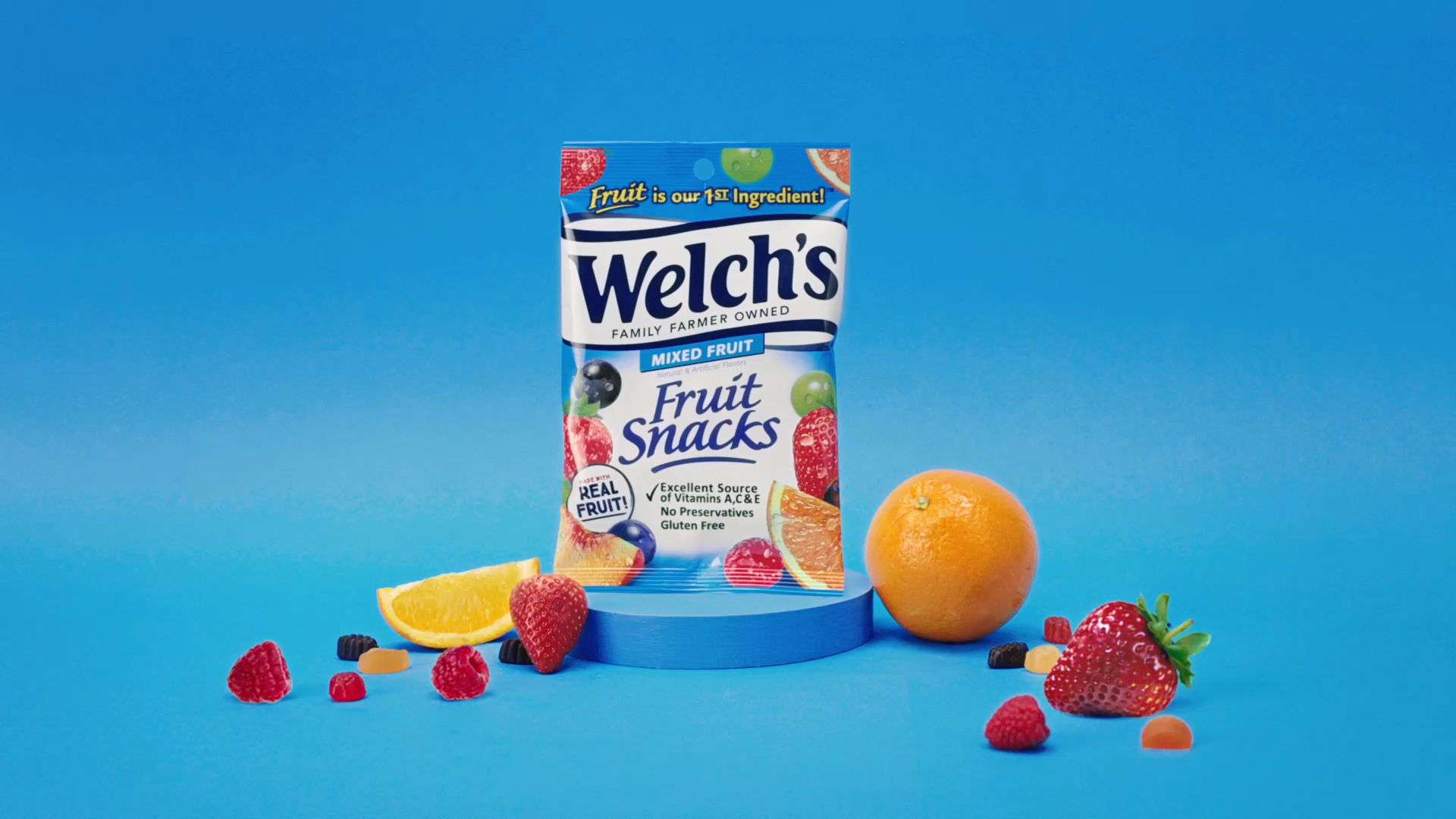
When it comes to delicious fruit flavor Welch’s is a brand known around the world. Since 1869, Welch’s has been providing flavorful fruit products for families everywhere. This amazing brand isn’t just about providing families with amazing flavor but giving opportunities to families!

Unlike brands that are owned by a single family, Welch’s is owned by 700 farm families in the United States. All of these farms work together to grow and harvest the best fruit. This fruit is then used to give these tasty fruit snacks a strong fruity flavor.

In addition to the wonderful taste, Welch’s fruit snacks have an amazing gummy texture that is loved by adults and kids alike. These snacks aren’t just about taste and texture, but also nutrition. Each package of gummy goodness is filled with Vitamins C, A, and E.

Enjoy these fruit snacks in Mixed Fruit packs, or try the Berries & Cherries flavor pack. They can be found in grocery stores across the country as well as on Amazon.


Betty Crocker

Betty Crocker

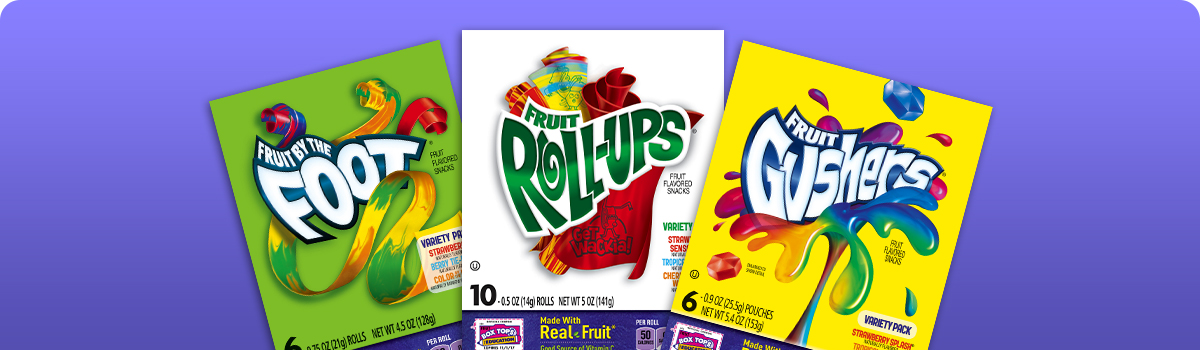
As an adult, your draw to fruit snacks may be more about nostalgia than nutrition, especially if you are a kid from the ‘90s! While fruit snacks were all the rage at this time, what you may not have realized is that all of your favorite fun fruit snacks were all from the same brand. None other than Betty Crocker.

Betty Crocker is a household name in the world of delicious snack foods. Although it is usually associated with cakes. This brand isn’t just about cakes, though, it is one of the biggest brands to produce fruit snacks. However, hailing from the baking experts, these fruity fun treats are not as health-forward as some other brands. This brand does create the most fun and creative fruit snacks, though.

It was basically Betty Crocker that taught kids it’s okay to play with their food when they introduced Fruit Roll-ups and later Fruit By The Foot.

From there, the brand continued to reinvent snacks for kids by creating fruit snacks with new flavors and textures. The perfect example? Gushers!

In addition to the classics mentioned above, this brand reinvents fruit snacks frequently with new shapes and flavors to match current trends.

Here are just some of the popular fruit snacks by Betty Crocker.

  • Shark Bites
  • Scooby Doo
  • Pixar Pack
  • Disney Princess Pack
  • Pokemon
  • Spider-Man

Whether you are looking to revisit your childhood or share your favorite nostalgic flavors with your kids, Betty Crocker is the go-to for fun fruit snacks. Look for them everywhere you shop both in person and online.


Black Forest

Black Forest

If you grew up loving Gushers by Betty Crocker then you will love Juicy Burst fruit snacks by Black Forest. As an adult, you may even enjoy these more as the gummy outside is less sticky than Gushers (so it doesn’t stick to your teeth).

The combination of the delicious gummy outside and juicy center is a delightful blend of textures. A great choice when you want something beyond the basics of a regular fruit snack.

Like other brands, Black Forest includes a full daily dose of Vitamin C in each packet of Juicy Bursts. While all of the brand’s fruit snacks are made with real fruit juice, they also offer an organic version for those who want added health benefits.

Look for these Black Forest Juicy Burst flavors at your local Walmart or on Amazon.

  • Mixed Fruit
  • Berry Medley
  • Organic Mixed Fruit
  • Organic Berry Medley


Sunkist

Sunkist

Your favorite go-to brand for orange juice found a new way to provide you with your daily dose of Vitamin C by creating fruit snacks! In addition to the health benefits of Vitamin C, Sunkist keeps its fruit snacks healthy by avoiding artificial colors and flavoring.

Although not as well-known for fruit snacks as its parent company Betty Crocker, Sunkist still knows how to make a quality fruit snack. The taste and texture of these fruit-forward snacks are a great choice for kids and adults. However, Sunkist keeps it simple with only one flavor option: an assorted fruit snack pack.

The only downside to these fruit snacks is that they are more difficult to find. However, when they are in stock on Amazon, they are a great choice for a great price.


Great Value by Walmart

Great Value by Walmart

Great Value by Walmart is a brand committed to supporting families by providing affordable products that are also of great quality. Their fruit snacks are a great example of this.

Fruit Smiles by Great Value are an excellent choice for those who want the same fantastic texture and taste of a name-brand fruit snack without the cost. You can pick up a box of 50 fruit snacks for under $7! However, unless you eat fruit snacks in your home daily, the smaller box is a better choice for maintaining freshness.

While these affordable snack packs are full of flavor, the flavor comes from artificial flavoring. Therefore, if real fruit juice or real fruit flavor is important to you, then these are not the best choice. If your goal is a great tasting easy-to-grab snack that is fun to eat and affordable though, this is a winner!

Pick up a box of the Original Fruit Smiles or the brand’s Tangy Fruit Smiles next time you are at Walmart.


Market Pantry by Target

Market Pantry by Target

If you frequent Target more than Walmart, then Market Pantry fruit snacks are worth checking out. Like Great Value, Market Pantry offers great-tasting fruit snacks at a family-friendly price.

Even though these are more affordable compared to some name-brand snacks, they still offer many of the same high-quality benefits like being made without synthetic colors or artificial flavors. They also have a great taste and texture.

Look for Market Brand fruit snacks in either Mixed Fruit flavor or Strawberry flavor the next time you are at Target.


Dole

Dole

Although mostly known for pineapples, Dole is a brand with a strong focus on all fruits. Moreover, they are a brand committed to using fresh fruit to create the best products possible. That’s why their fruit snacks are a great choice for those who want a healthier option from a well-known brand.

Dole fruit snacks are made with real fruit juice, but it is more about what they don’t use that makes them popular. No high fructose corn syrup, no added colors, and no gelatin. Therefore, they are great for vegans and those with allergies to food dyes.

While these fruit snacks may not come in the same fun shapes and colors as other brands, they are still a delicious choice. Surprisingly, there are not any pineapple ones, but you can choose from three other flavors: strawberry, orange, or grape.

These are easiest to find on Amazon but may also be available in your local grocery store.


Mott’s

Mott’s

Like Dole, Mott’s is another brand known for a particular fruit. In this case, apples. If you have enjoyed Mott’s applesauce before, you may already know that they are a health-forward brand.

Fruit snacks are one of the newest products for the brand. Launched in 2010, Mott’s fruit snacks have been providing parents with a sneaky way to get their kids to eat fruits and vegetables. Every package of Mott’s Fruit Snacks has two servings of fruit and veggies.

The fruit and veggie servings help to color these snacks too. That means no artificial colors are needed. In addition to the traditional fruit snacks, Mott’s even makes a fruit snack with fiber for extra health benefits.

Although these snacks have a lot of health benefits, one complaint from health-conscious parents is that they are still made with high fructose corn syrup. If you need a way to sneak some veggies to your kids though, that may balance out the corn syrup.

Look for Mott’s different flavored fruit snacks at your local grocery store.

  • Assorted Fruit
  • Berry
  • Tropic Fruit
  • Assorted Fruit with Fiber


Kellogg’s

Kellogg’s

Kellogg’s is best known for its cereals and other breakfast foods. However, if you look closely at some of the fruit snack boxes on the grocery aisle you may be surprised to see several Kellogg’s options.

This Kellogg’s brand label is sometimes overshadowed on fruit snack boxes by the fun shapes that appeal to children. Like their Paw Patrol fruit snacks!

While this brand does focus on a variety of fun shapes for kids they are not as focused on having a variety of flavors. Therefore, you will most likely only find strawberry, mixed berry, or cherry-flavored fruit snacks.

As seen in the fun shapes, these fruit snacks lean more towards the snack part and less on the fruit. These are a good choice for giving kids a fun treat, but may not be the healthiest choice compared to other brands.

If you can’t find these fun-shaped fruit snacks at your grocery store, check online at Amazon.


Funables

Funables

When it comes to creating fun fruit snacks, Funables is the brand to look for. This brand is committed to creating fruit snacks that are focused on being kid-approved.

Although this brand is committed to being kid-approved and fun to eat, they also want to be parent-approved. Therefore, each pack of fruit snacks is made with real fruit puree and is packed with vitamins A, C, and E.

While Funables does use corn syrup as a primary ingredient for flavor enhancement, many find that the variety of fun shapes and flavors they offer is worth the extra sugar.

  • Strawberry fruit snacks
  • Mixed Berry fruit snacks
  • Sour Mixed Berry fruit snacks
  • Paw Patrol fruit snacks
  • Batman fruit snacks
  • Baby Shark fruit snacks
  • Super Mario fruit snacks
  • Barbie fruit snacks
  • Tic-Tac-Toe fruit snacks

When you want a fun fruit snack for the kids look for Funables online at Amazon or in person at Target.


AriZona

AriZona

You may think of tall cans of iced tea when you hear the name Arizona. While Arizona began as a beverage company, they have expanded over the years to include snack foods.

One of the brand’s fun snacks is its fruit snacks.

This brand prides itself on having fruit listed as the first ingredient in its fruit snacks. Compared to many other brands that list the sweetener as the first brand. This is a great reflection of the brand’s focus on creating a truly fruit-flavored snack.

Although fruit snacks are a newer product for Arizona, the brand stayed true to its beverage roots by bringing the fun flavors of Arizona drinks to the fruit snacks.

Try their brand favorite Arnold Palmer Half & Half Fruit Snacks or the classic Arizona Green Tea Fruit Snacks. In addition, you can also find a classic Assorted Fruit flavor pack.

Arizona fruit snacks are easy to find on Amazon for direct shipment to your home.


Organic Fruit Snack Brands

Most classic fruit snacks have some nutritional benefits. They may provide a daily dose of vitamins or a serving of fruits and vegetables. However, most of them are still made with other ingredients that some feel counteract the nutritional bonuses.

Some brands use high fructose corn syrup and artificial coloring. Other brands have artificial flavoring. Most are made with gelatin. Therefore, while you and your kids may love the texture and taste of a classic fruit snack you may not love what is used to make them.

If you want a fruit snack that is fun, flavorful, and free from artificial ingredients, try one of these amazing organic fruit snack brands.

Yum Earth

Yum Earth

Yum Earth makes a fruit snack that is the ultimate healthy version of the childhood classic. These fruit snacks are not only organic but also allergy free. No eggs, no dairy, no gluten, no nuts, no soy, and no fish. They are also free from artificial sweeteners and dyes. Plus, no high fructose corn syrup.

Despite eliminating so many ingredients typically found in fruit snacks, Yum Earth fruit snacks have delicious flavor and texture. In fact, many find these healthy fruit snacks resemble a gummy bear more than a fruit snack.

In addition to the standard fruit snack flavors like cherry and strawberry, Yum Earth also has a peach flavor and even a banana flavor. A unique and fun combination compared to other brands.

Look for these tasty and healthy fruit snacks on Amazon.com


Annie’s

Annie’s

If you are someone who regularly looks for organic foods then you are most likely familiar with Annie’s. This brand is one of the most well-known pre-packed food brands. Moreover, they are known for being a favorite for kids because of their signature bunny shape.

Annie’s also makes a fun mini-sized bunny fruit snack. These aren’t just made for kids though. Packed with real organic fruit juice and without high fructose corn syrup or gelatin, these are perfect for anyone looking for a healthy vegan fruit snack.

Look for these fun-shaped and flavorful fruit snacks at your local grocery store or on Amazon.

  • Summer Strawberry
  • Berry Patch
  • Tropical Treat
  • Bunny Fruit Snacks Minis
  • Bees, Bugs, and Butterflies: strawberry, raspberry, and apple


Stonyfield

Stonyfield

Stonyfield is another brand that is well-known in the organic market. However, they are typically associated with dairy products. While the brand’s main line of organic products is yogurt they have a newer line that includes other organic snack products like its fruit snacks.

These fruit snacks maintain the brand’s commitment to organic ingredients. Made with organic fruit and vegetable juice they are a fun and healthy choice. They come in two flavors, either Mixed Berry or Strawberry. Both flavors come in fun cow shapes!

The only downside to these fruit snacks is they are less commonly sold in grocery stores. Therefore, you will need to look for them online at Amazon if you can’t find them in stock at your local grocer.


Stretch Island

Stretch Island
If you don’t mind missing out on a cute cow or bunny shape and are more focused on real fruit flavor then look for Stretch Island Fruit Leather. These fruit snacks are made from fruit puree rather than fruit juice. Therefore, the flavor is bold and fresh.

The use of real fruit puree also provides a texture that is thicker and chewier compared to the gummy texture of traditional fruit snacks. If you want a fruit snack that has a more adult-friendly feel then these are a great choice. However, they are also perfect for kids.

Another great thing about these fruit snacks is that they have a wide variety of flavors. Even better? They are sold in a variety box so you can try all of the flavors.

  • Cherry
  • Apple
  • Strawberry
  • Grape
  • Raspberry
  • Apricot

Pick up a box at Walmart or order one on Amazon.


That’s It

That’s It

Similar to Stretch Island, That’s It provides a different take on fruit snacks. Focusing on using real fruit, not just fruit juice.

That’s It uses only real fruit to create its fruit bars. Just take a look at their labels and you will see the only ingredients listed are fruits. For example, the only ingredients you will find listed on their popular Apple + Blueberry Bar are apples and blueberries.

While they don’t come in fun fruit shapes each bar does provide two full servings of fruit. Moreover, they make up for the lack of fun shapes with a wide variety of fun flavor combinations.

  • Apple + Apricot
  • Apple + Banana
  • Apple + Blueberry
  • Apple + Cherry
  • Apple + Coconut
  • Apple + Date
  • Apple + Fig
  • Apple + Mango
  • Apple + Mango + Chili
  • Apple + Strawberry
  • Apple + Pear
  • Apple + Pear + Ginger
  • Apple + Cranberry
  • Apple + Cinnamon

If you want a true fruit snack that is all-natural, check out this brand. While you can buy directly from the brand’s website, they are often sold out of their more popular flavors. Therefore, you may have better luck buying from Amazon.


Conclusion

And that’s it! If you’re feeling hungry, now you know where to go for a delicious snack.

We hope this list has been helpful in giving you an idea of what’s out there and what kinds of fruit snacks you can expect to find in stores near you.

If you don’t see your favorite fruit snack brand on this list, let us know via email, and we’ll add it to the next edition.

Happy (fruit) snacking!

467 Smoothie Slogans To Get The Attention You Need

353 Smoothie Shop Name Ideas For Smooth Business

545 Juice Bar Name Ideas You Cannot Go Wrong With

449 Deliciously Fun Jam Company Names

433 Acai Bowl Business Name Ideas To Be Inspired By

X