Recent Posts

How Does Omegle Make Money? Business Model of Omegle


How Does Omegle Make Money

Omegle is a popular free online video and text chat website that users can log onto to socialize. It randomly pairs users in sessions where they can chat anonymously.

Like many social networking sites, Omegle primarily makes money via advertising. However, Omegle also makes money via affiliate marketing.

The website was founded in 2009 by Leif K-Brooks when he was only 18 years old. Omegle advertises itself as a way to meet new friends by pairing strangers in one-to-one video and text chats based on a random algorithm.

The site averages 94 million monthly visitors or roughly 23.5 million users per week. That traffic primarily comes from the United States. However, India, Italy, Mexico, and the Philippines are other top users of Omegle.[1]

What is Omegle & How Does It Work?

Omegle is a free online video and text chat platform where users go to randomly be paired with strangers for anonymous video chats.

Getting started on Omegle is easy. Users just navigate to the site and choose whether they want to start a video or text chat. They can also add interests that they would like to chat about to help them find a better match. If Omegle can’t find someone interested in chatting about the same topic, the site will connect you with a random person as it would normally do.

For video chatting, users need a functioning webcam and microphone. After that, users are connected with a stranger that they can immediately begin chatting with over text or video. When their chat partner comes up, they are named ‘Stranger’ in the chat.

At any point during the conversation, participants can click to stop the session. For this reason, it’s common for Omegle users to suddenly end chats. Many people actually browse through several users before picking someone that they want to chat with.

Omegle has some options and features that can help users find more appropriate conversational partners. For example, users can add their college email address to enter a student chat. When doing this, users will get an email to verify that they are indeed a student.

Omegle also allows users to spy on others. Users can choose the spy/question option and be entered into other people’s chats. You can add a discussion question to their chat to see what others have to say about that topic.

The platform has a few rules that govern its use. Users must be over 13 years old and have their parent’s or guardian’s permission to use Omegle if they’re under 18 years old. Omegle also prohibits the transmitting of obscene materials or using their platform to harass other users. They also require that users not do anything that is illegal according to their national or local laws.

However, given the fact that Omegle does not require that users register and makes no effort to verify the age of their users, it is very likely that these rules are often broken. If they are, it would be very hard for the service to ban users who repeatedly violate their user agreement because Omegle does not require that users register.

Omegle claims to monitor video but also offers unmoderated and adult sessions where the video is not monitored. It is unclear whether Omegle’s popularity is driven primarily by the use of the general or adult version of their site.

Because users are anonymous, Omegle is known for bad behavior by other chatters. People often complain about being insulted or treated badly on the site. However, the ease of disconnecting from a chat means that users can potentially easily escape from bad actors on the website. The problem is that underaged users could connect with people who seem friendly initially and gain their trust.

The site has frequently been cited as unsafe because of the risk of viewing inappropriate content, the lack of moderation on their video chats, the danger of having metadata related to images or tests hacked from users’ computers, and the potential exposure of personal information.[2]

Indeed, many local and state law enforcement agencies have warned the public about random chat sites like Omegle. The sites saw a surge in popularity in 2020 when some popular YouTube and Tiktok users started using similar websites to create video content. Law enforcement then saw a surge in reports of cybercrime and child luring connected with these sites.[3]

The site has also been identified as a place where child sex predators have gone to prey on teenagers. A Canadian man was convicted of abusing an underage girl via the site starting in 2014. That led to a 2022 lawsuit against the company for $22 million by the victim. Just 11 years old when she was paired with a man in his late 30s via the site, the abuse lasted three years.[4]

In 2021, when a child protection center did a search, it found 170 videos from Omegle of children that appeared to be between six and 15 years old that were being traded on dark web forums.[5]


Business Model of Omegle

Omegle’s business model is to offer a free chat platform to connect with others socially in order to generate a dedicated user base. The company does not require user registration, and it doesn’t offer paid or subscription features.

This increases the likelihood of people using the service and increases the site’s traffic. Indeed, it is estimated that the site averages 94 million monthly visitors or around 23.5 million users per week.[6]

The company then finds various ways to monetize that audience. Advertising is Omega’s core monetization strategy. While others have speculated that Omegle might make money user contributions, no one has found proof that they are indeed doing so.

While the company claims it monitors video chats for those under the age of 18, the number of reported incidents on the site would suggest that their monitoring isn’t very effective. The company also has an unmonitored video chat that can include nudity and sexual content for those over the age of 18. Their unmoderated chats are likely the source of a significant amount of the site’s traffic, although Omegle doesn’t release a breakdown of usage.

The website’s business model likely appeals to people who are lonely and looking for friends. It is not the first random chat website to gain popularity. Chatroulette is another popular site that randomly pairs strangers for video conversations. Other sites include Camsurf and Chatspin. Each of them has faced controversy over similar issues with safety, especially for underaged users.

The current $22 million lawsuit filed against Omegle for its role in child sexual abuse opens up questions around the liability involved in running a company with this business model. While the suit has yet to be decided in court, if Omegle loses there is a chance that it could bring additional lawsuits against the company by others who may have experienced similar harm. Whether that would cause Omegle to go out of business or shift its business model remains to be seen.

Omegle is a private company and does not release its financials, so it is unclear how much the company spends on expenses. Given the site’s simple design, the majority of its expenses likely go towards the cost of hosting and monitoring chats.

Since Omegle seems to have never raised funds via venture capital, it is likely that the company makes more than enough money to cover their expenses.


How Does Omegle Make Money?

Omegle makes money in two ways, via advertising and affiliate marketing. As Omegle is not a public company and does not release their financial information, it is unclear how much they make from these revenue sources.

Advertising

The majority of Omegle’s 94 million monthly visitors are based in the US. That means that the company can likely make a premium on advertisements. However, given the nature of the site and the controversy that surrounds it, large companies likely don’t allow their ads to populate on the site.

Omegle does not have its own advertising network but instead includes advertisements on its site via other unnamed digital ad networks. It is unclear how much the company generates from advertisements.


Affiliate Marketing

Affiliate marketing is when a company is paid a commission or referral fee for sending customers to another company’s site. In Omegle’s case, they have affiliate links that seem to primarily send visitors to adult webcam sites.[7]

It is unclear if they get an affiliate fee for just sending traffic to other sites or if they only make money if the traffic they send there make purchases.

It is unclear how much Omegle might make from this source of revenue.


Omegle Funding, Valuation & Revenue

Omegle is currently a private company and has never released any information about it’s financials to the public. However, some have estimated that based on the site’s traffic Omegle could make up to $216 million annually from cost-per-click ads.

Because this is an estimate, Omegle’s actual revenue could be considerably more or considerably less than this. It is likely that Omegle made more money in 2020 during the pandemic when more people were using chat sites like Omegle to combat loneliness while social distancing.

It is also unclear what Omegle’s valuation might be since there are so few financial details about the company available. Omegle has also not raised money via venture capital.

The company’s expenses are likely relatively conservative and easily covered out of their existing ad revenue. They, therefore, have not required venture capital funds to cover their expenses or grow.


Is Omegle Profitable?

Omegle is profitable. While the company has never released details about their revenue or other financials, Omegle has also never raised venture capital funds. That seems to suggest that the website is generating enough revenue to cover its expenses.

However, it is impossible to know just how profitable Omegle could be. While some have suggested they could make as much as $216 million per year in cost-per-click ads alone based on their web traffic, the actual number could be much higher or much lower.


Conclusion

In conclusion, Omegle makes money by selling ads on their website and connecting users to third-party websites for affiliate commissions. It’s a pretty straightforward business model.

We hope you enjoyed this blog post about how Omegle makes money, and we’re excited to hear your thoughts. If you’ve got any questions for us, just let us know! We love hearing from our readers, and we’ll do our best to respond as quickly as possible.

Whether you’re looking for a quick chat or something more serious, don’t let the stigma surrounding Omegle hold you back from trying out one of the best ways to meet new people!

15 Gen Z Dating Statistics To Keep You Ahead Of The Curve

21 Teenage Dating Statistics That Will Make You Cringe

How Does Tinder Make Money? Business Model of Tinder

Sources

  1. SimilarWeb
  2. Security Gladiators
  3. Global News
  4. CBC
  5. CBC
  6. SimilarWeb 
  7. Omegle

How Does Nextdoor Make Money? Business Model of Nextdoor


How Does NextDoor Make Money

Nextdoor is a popular hyperlocal social networking service for neighborhoods. The company has a few methods of generating revenue.

Nextdoor primarily makes money via sponsored posts. However, the company also makes money via local deals and neighborhood sponsorships.

Founded in 2008 in San Francisco by Nirav Tolia, Sarah Leary, Prakash Janakiraman, and David Wiesen, Nextdoor is known for its hyperlocal approach to social media. The networking tool focuses on consumers and businesses in their neighborhoods of residence.

The company aims to foster kinder community interactions. For example, Nextdoor partnered with the American Red Cross and Centers for Disease Control to act as a communication tool during the coronavirus crisis. [1] The company reported an increase in user engagement of 80% during the first month of the pandemic. [2] The company also partners with Vote.org to offer an interactive Vote Map during elections and encourage civic participation. [3]

Nextdoor became a publicly traded company in November 2021. [4] It trades on the New York Stock Exchange under the KIND symbol.

What is Nextdoor & How Does It Work?

Nextdoor is a social networking platform for local neighborhoods. In 2021, there were 63 million Nextdoor users [5] in more than 280,000 neighborhoods across 11 countries. [6] In addition to the United States, Nextdoor is active in the U.K., the Netherlands, Germany, France, Italy, Spain, Australia, Sweden, Denmark, and Canada.

Nearly one-third of American households use the network.[7] Nextdoor allows neighbors to connect and share information based on their geographical location. To join Nextdoor, users can download it to their iOS or Android devices or sign up on the website.

Users must register their real names on the network. They also must confirm their address to be placed into a neighborhood group.

People use Nextdoor to access a variety of relevant local topics, including:

  • Gardening tips
  • Buying and selling used goods
  • Small business promotions
  • Recommendations for local businesses
  • Reporting crime or suspicious activity
  • Volunteering and giving back
  • Pet walking and snow shoveling
  • Searching for homes or apartments
  • Listing homes or apartments for sale or rent

Once registered, users can join different groups based on their areas of interest. People can connect with other nearby neighbors or users from their contacts. Users can post messages to anyone on the platform or directly to their home neighborhood.

Local businesses can set up pages on the network. They can easily publish their list of services, hours, and location. Businesses can engage with potential customers directly through private messages and responding to post comments.

Nextdoor users can tag businesses when making local recommendations, which is good for the business. Research shows that 90% of people are more likely to trust a recommended brand, even if they don’t know the person making the recommendation.[8]

One of the benefits of Nextdoor is its focus on local connection. Neighbors can alert each other to thefts or recommend a great local business. This makes the platform conducive to building local relationships and boosting awareness of local businesses and services. Users can also become more aware of local news, events, and risks in their areas.

According to the company, 73% of users say that neighbors are their most important community.[9] For parents, 30% say that meeting other local parents with same-age children is a top reason to join the platform.[10]

The platform is popular with its users. In August 2022, the platform received 75.7 million visits.[11] The average visit duration was over eight minutes long.[12]

Nextdoor has been the subject of controversy in recent years. Nextdoor has been the subject of controversy in recent years. The platform has struggled to shed its reputation as a tool for covert racism and “snitching.” [13] Nextdoor Users were upset by the company’s lack of support for the Black Lives Matter movement during the George Floyd protests. [14] Many of the users who commented on race-related discussions ended up having their accounts suspended or deleted.


Business Model of Nextdoor

The business model of Nextdoor is to foster hyperlocal online community through a free social network that they then monetize via advertisements.

Just as LinkedIn is a platform for people to connect around where and how they work, Nextdoor is a platform for people to connect around where and how they live.

Like with other social media networks, Nextdoor offers free use of the platform to encourage many people to use it regularly. They monetize their audience via advertising, including branded partnerships.

Nextdoor has three distinct streams of advertising revenue. The company makes money via sponsored posts, local deals, and neighborhood sponsorships. Nextdoor’s value proposition to their advertisers is the ability to target customers within 30 miles of the business.

Nextdoor has an enticing value proposition for users. On apps like Facebook marketplace, users can’t be sure that they are interacting with a real person from their area. Nextdoor’s emphasis on validating users’ real names and addresses provides a greater sense of trust and security on the platform.

Nextdoor’s value proposition to advertisers is unique in that it offers up a network of local users. In August 2022 in the United States, the company’s site held the number one rank for the search term neighborhood. [15]

On average, 20% of the platform’s users earn over $75,000 per year, and 24% hold a college education or higher.[16] Local businesses, realtors, and real estate companies are natural matches for Nextdoor’s educated, higher-earning consumers.

Unfortunately, the company’s reputation as a site for negative content and neighbors who snitch on each other could have an impact on revenue. The company itself has admitted that toxic content drives short-term engagement. However, over a six-month period, that exposure to toxic content on the platform drives users away. [17]

According to the company, many of their advertisers do not have long-term advertising spend commitments with Nextdoor.[18] The advertisers who do spend will only do business with the company if their ad spends are effective. This single method of generating revenue represents a risk to the long-term health and growth of the company.

Nextdoor faces direct competition from many different companies. Its focus on local reviews is similar to big players like Yelp and Google. In local buying and selling, Nextdoor’s rivals are Facebook Marketplace, Kijiji, Poshmark, eBay, OfferUp, and Decluttr. When it comes to social networking and local news, Facebook, Twitter, and Reddit are all big competitors. Facebook Groups and Business pages offer similar value to users.

Nextdoor has over 600 employees[19], and there are significant costs associated with running the platform. According to the company’s annual report, total costs and expenses for the past two years ranged from $199.9 million in 2020 to $287 million in 2021.[20]

In addition to the cost of revenue expenses, the company spent money on research and development, sales and marketing, and general administrative items. The company spent $23.7 million in advertising in 2020 and $37.5 million in advertising in 2021.[21] These expenses greatly reduce Nextdoor’s potential profitability.


How Does Nextdoor Make Money?

Nextdoor makes money via a few different methods of online display advertising on its platform. These include sponsored posts, local deals, and neighborhood sponsorships.

Nextdoor does not break down how much they make from various revenue streams in their annual report. However, CEO Sarah Friar aims to make the company a worldwide player, which would increase their revenue base. [22]

Sponsored posts

Sponsored posts allow businesses to build awareness for their brand with local relevance and context. Sponsored posts can be placed in users’ newsfeeds.

These ads usually include the following details about a business:

  • Logo
  • Business name
  • Subject line
  • Body copy
  • Offer text
  • CTA, or Call-to-Action
  • Post image
  • Business URL
  • Phone number

Nextdoor recommends that businesses make their images and copy clear, local, and relevant to the neighborhood.


Local deals

Local deals are meant for individuals offering services and local businesses to share promotions and discounts with their Nextdoor neighbors. A business needs to have claimed their business page on the platform to share a deal.

The types of deals that can be offered on the platform include:

  • Percentages off
  • Fixed discounts
  • Buy one get one free
  • Custom deals

Advertisers must specify details about their deal. They must indicate information about their business so that users who want to claim the deal can easily contact them.

Advertisers can select a one-time, specific duration for their local deal purchase. Or they can purchase a monthly subscription that will automatically renew.

Advertisers can select the audience that will see their local deal from between a two and 10-mile radius of their business address.

Currently, local deals are only available for Nextdoor users in the United States.


Neighborhood sponsorships

Neighborhood sponsorships are the advertising solution for real estate agents on Nextdoor. The realtor must create a page for their brokerage on the platform, then claim their business on the site. Once they’ve done so, they can purchase ads that will be displayed on the site based on set zip codes.

Realtors can sponsor as many neighborhoods as they choose. They are charged a set fee based on criteria like how many other realtors are actively sponsoring the area or how many neighbors are using Nextoor in that area.

Since Nextdoor has a real estate tab that can be used to search available listings, the ability for a realtor to sponsor their ad at the top of the feed can be important for lead generation.

Realtors can also purchase branded listings to include personal branding alongside their own listings. However, the branded listings service was discontinued for agents who hadn’t signed up for it before July 22, 2019. Branded listings are purchased on an annual or semi-annual basis.

Nextdoor does not list how much they charge for each type of ad on their site.


Nextdoor Funding, Valuation & Revenue

Nextdoor (KIND) is currently a public company trading on the NYSE. It had a valuation as of September 2022 of $1.30 billion. [23]

Prior to going public, Nextdoor raised $717.9 million in venture capital funding during twelve funding rounds.[24] Notable investors include ARK Investment Management and Soroban Capital Partners LP. [25]

Nextdoor’s revenue has only been publicly available since they went public, but they have increased their gross revenue since 2020. They have gone from $123.3 million in revenue in 2020 to $192.2. million in revenue in 2021.[26]

However, the company has continued to lose money. They lost $95.3 million in 2021. That was up from the $75.2 million that they lost in 2020. That is likely because the company is continuing to invest in growth as they try to enter new markets and expand globally.

YearTotal RevenueNet Income
2020$123.3 million($75.2 million)
2021$192.2 million($95.3 million)


Is Nextdoor Profitable?

Nextdoor is not currently profitable. The company has lost money over the past two years. While Nextdoor is steadily increasing its revenue and generated $123.3 million in gross revenue in 2021, it lost $95.3 million that year.

It isn’t clear if the company will be able to generate a profit in the future, but it does seem like some of the losses are connected to investment in new markets. Nextdoor has stated that the company has aggressive growth plans for expanding into new countries.

If Nextdoor can diversify its income streams from its current advertising model or reach a global audience, it may be able to generate a profit in the future.


Conclusion

In conclusion, Nextdoor is a company that has been able to establish itself as the leading social media platform for neighborhood communication. Nextdoor is a great example of a business model that works by using the power of communities.

Their business model is based on providing a free service that can be used by anyone with an internet connection, but they make money by selling advertising space to local businesses. They are able to do this because their users are willing to give up their personal information in exchange for the privilege of being able to communicate with other people in their neighborhood.

Nextdoor has allowed for communities to form around shared interests, which can lead to increased civic engagement and participation in community events. While it may not be the most exciting topic, it’s definitely something we should be paying attention to!

1333 Funniest WiFi Names To Make Your Neighbors Suffer

35 Workplace Loneliness Statistics (The Problem Is Real)

Sources

  1. Yahoo! Finance
  2. CNN
  3. MyNews4
  4. The Wall Street Journal
  5. The Wall Street Journal
  6. Cision PR Newswire
  7. Cision PR Newswire
  8. Semrush
  9. Nextdoor
  10. Nextdoor
  11. Semrush
  12. Semrush
  13. Dallas Observer
  14. BuzzFeed News
  15. Semrush
  16. Pew Research
  17. Bloomberg
  18. Nextdoor
  19. Nextdoor
  20. Nextdoor
  21. Nextdoor
  22. Time
  23. Stock Analysis
  24. Crunchbase
  25. Crunchbase
  26. Nextdoor

How Does Mastercard Make Money? Business Model of Mastercard


How Does Mastercard Make Money

Mastercard is a popular electronic payment processor that is used by individuals and institutions throughout the world.

Mastercard primarily makes money via interchange fees. It also makes money from domestic assessments, cross-border volume fees, and other fees.

Founded in 1966 by a collective of banks, Mastercard’s development was inspired by Bank of America’s credit card. It all started when Karl H. Hinke, the executive vice president of Marine Midland Bank, requested a meeting with the representatives of several other banks.

Bank of America refused to provide Marine Midland with a regional license for their credit card. Hence, a collective known as the Interbank Card Association was born, which attracted 150 members within its first year.[1] And in 1979, the collective was renamed Mastercard.

What Is Mastercard & How Does It Work?

Mastercard is an electronic payment processor that facilitates transactions in 150 currencies across 210 countries and territories. According to a 2020 report, Mastercard is accepted by 37 million merchants around the world.[2] This figure includes both physical and online businesses.

It also includes payments made via debit, credit, and prepaid cards. Mastercard itself doesn’t provide cards or credit. Instead, it connects banks with the transaction network that acts as an information highway for all the data processed during each electronic transfer.

Banks provide rewards and other incentives to their customers, based on the card tier. Mastercard is responsible for making sure that payments transfer from the customer’s bank account to the merchant’s bank account. They do this on a core network that authorizes, clears, and settles each payment in real-time.

Mastercard’s systems work 24 hours a day, 365 days a year. The payment experience is designed to be quick, safe, and consistent irrespective of the amount being transferred. In 2020 alone, Mastercard processed 113 billion transactions around the globe.[3]

According to a Q1 2022 report, Mastercard had nearly 2.9 billion cards in circulation around the world.[4] This includes credit, debit, and prepaid cards. Mastercard doesn’t just offer its services to individuals but also offers different forms of credit services to businesses, banks, and government institutions around the world.

Through its infrastructure, Mastercard can process automatic clearing house (ACH) batch transfers. This allows businesses to clear payments in real-time with the capability for international fund transfers. Mastercard also has a multi-layered security system that is accessed by third parties and constantly improved with feedback from consultants.

A 2021 survey found that most customers like to use their debit cards in stores and credit cards while making online payments.[5] Cash was the third most popular payment option, trailed by finance services such as PayPal and Apple Pay. Among credit card processors, Visa enjoys the largest market share, followed by Mastercard.

Functionally, Visa and Mastercard offer the same services. Generally, an outlet that accepts Visa also accepts Mastercard. Hence, customers usually make their choice based on the rewards and cashback bonuses paid out by banks. The convenience of swiping a card to pay within seconds makes electronic payment preferable to cash for many.


Business Model of Mastercard

Mastercard follows a business-to-business model by facilitating the transfer of funds between financial institutions. Since Mastercard itself does not lend credit or provide liquidity, the company doesn’t have to worry about loans and interest rates. It has an established framework that turns out more revenue with each passing year as the number of people making electronic payments increases.

The company makes its money from interchange fees that are charged to the merchant every time they receive a payment through Mastercard. This interchange fee is then split between Mastercard and the bank that provided the card. Banks provide rewards and kickbacks from their share of the interchange fee.

Because of how its infrastructure is set up, Mastercard and similar payment providers have very high profit margins. In 2021, Mastercard had a profit margin of 46%.[6] For reference, Target made a net income of $6.9 billion on a total revenue of $106 billion in 2021.[7] That amounts to a 6.5% profit margin, which is above average for many such big box retailers.

Mastercard generates money on every transaction made through its network. Unlike a retailer, Mastercard doesn’t have to spend money on acquiring and organizing inventory. Nor does it have to set up physical locations for users to access its services. Mastercard also doesn’t need to spend much money on advertising relative to how popular it is. Many of its business partners advertise on the company’s behalf when touting their branded Mastercard options.

Banks, financial institutions, merchants, and even governments use Mastercard for a major portion of their transactions. Mastercard iterates upon its existing technology and invests in additional computing power. The returns on their investment are massive simply because of how many people use the service on a daily basis around the world.

Electronic monetary transactions are a necessary service, and there isn’t much competition in this sector. Mastercard is the second largest of just four major card networks in the United States. The other three are Visa, Discover, and American Express.

Mastercard is accepted by nearly every merchant that accepts credit and debit cards. And merchants themselves often use Mastercard to pay for the acquisition of goods. Mastercard is used by every major demographic around the world.

A 2018 survey showed that 40.36% of Americans between 18 to 29 years of age used Mastercard cards.[8] They claimed to have used Mastercard credit cards for purchases made in the last three months. This shows that Mastercard is quite popular with the young adult demographic.

This group tends to make small, but frequent purchases both in-store and online. By using credit cards more often, they are able to generate more cashback and rewards offered by their banks. These users will then feel more confident increasing their credit card usage over time, which generates sustained revenue for Mastercard.

Over time, Mastercard has transitioned from being just a payment provider to a technology and consultancy service. These additional services are still centered around commerce, but they benefit from the vast archive of data that Mastercard maintains. Mastercard has made significant achievements in the field of cybersecurity, document proofing, biometrics, market insights, and analytics.

By sharing its expertise in the aforementioned fields with merchant institutions, Mastercard creates a safer and more sustainable electronic payment future for everyone involved. The company also facilitates dispute resolution for the issuing and receiving parties in all the transactions it processes.

It facilitates the development of products that allow consumers to pay for their favorite goods and services in the most convenient manner.

Currently, Mastercard’s business model focuses on in-store payments as one of the main sources of customer fulfillment. This is because a lot of electronic transactions take place through big box retailers such as Target. In 2021, Target made over 81% of its revenue through in-store purchases.[9]

Mastercard’s biggest rival is Visa, as they offer similar services. Visa is currently more popular, both in the United States and around the world. Mastercard and Visa aren’t competitors in the traditional sense, as they offer nearly identical services.

On top of that, nearly every merchant that accepts Visa also accepts Mastercard. And many customers have cards from both Visa and Mastercard. Visa cards generally have better benefits compared to Mastercard.

However, these benefits are allocated by the issuer and not the payment processor network. Mastercard and Visa collaborate with financial institutions to create better offers and value for customers. But the bank is liable to uphold all promised rewards.

Both Visa and Mastercard follow a three-tiered card system with basic, intermediate, and premium membership offered through banks. Stores must accept all three tiers of cards and aren’t allowed to change prices based on the type of card even though they pay greater interchange fees for the premium cards.

Discover is also a competitor, but it holds just 8.1% of the market share compared to Mastercard’s 31.6%. American Express comes in at the fourth position, with a 7.5% market share.[10] These numbers are for credit cards, but they also reflect the general popularity of each brand.

Mastercard has a few non-credit card competitors that could impact the future of its revenue model. Fintech payment companies like PayPal have captured a share of online payments that might have otherwise been processed via credit cards.

Apple Pay is another credit card alternative, but it can also work with credit cards, so it is less of a threat. There are also cryptocurrency cards gaining in popularity that allow individuals to make purchases using crypto in stores. Buy now, pay later funding options like Affirm advertise themselves as credit card alternatives as they allow people to buy items now without immediately paying for them but outside of traditional credit vehicles.

How much any of these alternative payment methods are likely to disrupt Mastercard’s business model is yet to be seen. However, what they point to is an appetite for alternative financial and credit products – especially among younger demographics. That could impact Mastercard’s revenue model in the future.

Mastercard has significant operating costs. These include hosting, research and development, staffing, and general administrative costs. In 2021, the company spent $8.8 billion on operating expenses.[11]

Most of the operating expenses were from general and administrative costs, which amounted to $7 billion. Advertising and marketing constituted $895 million. Depreciation and amortization made up another $726 million.[12]


How Does Mastercard Make Money?

Mastercard makes money from four different revenue streams. These include domestic assessments, cross-border volume fees, transaction processing, and other fees.

In 2021, Mastercard earned $18.8 billion in total revenue. Of this, transaction fees made up the largest amount generating $10.8 billion. Domestic assessments were the next biggest revenue generator at $8.1 billion.[13]

Other fees brought in $4.6 billion. And cross-border volume fees constituted $4.6 billion. Mastercard consolidates the revenue from its consulting fees, cardholder service fees, and anti-fraud protection services into one category called ‘Other fees.’[14]


Transaction Processing

Whenever a user places an order or pays for a service, Mastercard collects a switching fee for processing this transaction. This fee is calculated every time the user receives approval to transfer funds. Clearing and settlement of funds also carry a small fee.

Finally, there are further switch and connectivity fees. These are charged to issuers and acquirers of the card for using Mastercard’s network and equipment.

Transaction fees are the largest source of revenue for Mastercard. They constituted $10.8 billion, or 57.4% of its total revenue in 2021.[15]


Domestic Assessments

This is the money that Mastercard charges banks for the privilege of using its network. Domestic assessments are based on the volume of activity. In 2021, domestic assessments made up the second largest source of revenue for Mastercard with $8.1 billion.[16]

These fees only apply to transactions in which the merchant and cardholder are within the same country. Extra assessment fees can be charged depending on the number of cards issued by a bank to a customer.


Other Fees

Whenever a financial institution uses Mastercard’s anti-fraud services or consultancy for things like market analytics, it pays a fee. Other fees also include maintenance-related charges. These include things like insurance and assistance with lost cards.

In 2021, the company made $6.2 billion from this revenue stream.[17]


Cross-Border Volume Fees

Whenever the merchant and cardholder are in different countries, Mastercard will charge an international transaction fee. This is a relatively small portion of its revenue at 24.4%. But the amount is still quite significant as it generated $4.6 billion in 2021.[18]


Mastercard Funding, Valuation & Revenue

Mastercard Incorporated (MA) is currently a public company trading on the New York Stock Exchange (NYSE). The company launched its IPO in 2006 at a price of $39 per share for a valuation of $2.4 billion.[19] As of September 2022, the company’s stock traded for just over $315 at a valuation of $304.5 billion.

Mastercard hasn’t gone through any public funding rounds. This is likely because the company was originally funded by banks. Mastercard also generates a significant amount of money and has not needed additional capital.

In fact, Mastercard uses some of its extra capital to acquire companies. Between 2019 and 2021, Mastercard acquired 27 companies. Notable acquisitions include Dynamic Yield, Arcus Financial Intelligence, SessionM, and CipherTrace.[20]

Mastercard has been profitable for a long time. In 2021, the company generated $18.8 billion in revenue. It also made a net income of $8.6 billion — which is a 34.3% increase over the $6.4 billion it made in 2020.[21]

YearTotal RevenueNet Income
2019$16.8 billion$8.1 billion
2020$15.3 billion$6.4 billion
2021$18.8 billion$8.6 billion


Is Mastercard Profitable?

Mastercard is very profitable. The company has profit margins in excess of 40%. That translated into $18.8 billion in total revenue in 2021 and a net income of $8.6 billion.[22]

Mastercard is likely to stay profitable in the future as the number of online transactions keeps growing. With it, the number of people using credit and debit cards will also grow.

However, Mastercard could lose market share in the future if it does not also innovate on its payments technology and portfolio. Increasingly, fintech companies offering alternative payment options like PayPal, Affirm, and Apple Pay are increasing their market share.


Conclusion

Mastercard is a business that’s been around for decades, and it’s still going strong. The company has adapted to the changing landscape of payments, and it’s poised to continue growing in the future.

Their business model is simple, but it has been very effective for them. The fees charged by Mastercard add up to billions of dollars each year, which allows the company to generate large profits and pay their shareholders dividends every quarter.

The only area where Mastercard could improve would be in terms of transparency or lack thereof when it comes to fees charged by banks using their service as well as other fees associated with transactions made using Mastercard products that don’t seem to be known easily, but overall this is a great company with an even greater future ahead of it!

How Does Klarna Make Money? Business Model of Klarna

Top 9 Venmo Alternatives That Make Payments Way Easier

How Does Greenlight Make Money? Business Model of Greenlight

Sources

  1. Electronic Value Exchange
  2. ValuePenguin
  3. Statista
  4. Business Quant
  5. pymnts
  6. Mastercard
  7. Target
  8. Statista
  9. Target
  10. Shift Processing
  11. Mastercard
  12. Mastercard
  13. Mastercard
  14. Mastercard
  15. Mastercard
  16. Mastercard
  17. Mastercard
  18. Mastercard
  19. Financial Times
  20. Crunchbase
  21. Mastercard
  22. Mastercard

15 Oatmeal Cookie Brands To Treat Your Tastebuds


Oatmeal Cookie Brands

When the craving for a delicious cookie hits, you don’t often want to stop and make cookies. Therefore, having a favorite brand of cookie you can pick up at the store can help satisfy that craving. It’s not just about getting any type of cookie, though. It’s about satisfying the craving for a certain type – like a chewy oatmeal cookie.

Thankfully, there are several delicious oatmeal cookie brands to choose from when you need to satisfy your craving. From classic oatmeal to ones with raisins or chocolate chips, there is one for every person’s taste buds.

Happy Belly

Happy Belly

There have been many favorite brands of oatmeal cookies over the years. One that was a favorite for over 35 years was Mother’s. Unfortunately, this beloved brand was discontinued.

Despite being discontinued, many people still look for that same amazing taste and texture of Mother’s oatmeal cookies. If you were a fan of Mother’s oatmeal cookies, then you are in luck.

Happy Belly oatmeal cookies taste very similar to the old Mother’s cookies. Moreover, some customers have said they even taste a little bit better.

As an Amazon private label, you can easily find Happy Belly Oatmeal cookies on Amazon and have them delivered to your house. Since they are only available on Amazon, though, you will need to plan when you want these cookies since you can’t run to the grocery store for a last minute craving.


Heavenly Hunks

Heavenly Hunks

Cookies may be a treat, but they don’t have to be unhealthy, especially with Heavenly Hunks. Heavenly Hunks Organic Dark Chocolate Oatmeal Cookies are full of flavor while still being good for you. Even better, they come in a snack-friendly size that is easy to grab on the go.

Not only are these delicious cookies dairy-free, but they are also gluten-free and vegan-friendly. In addition, Heavenly Hunks cookies are made with all organic ingredients. A perfect choice for those who want a cookie that tastes amazing while still being healthy.

Grab a bag of these fun-sized oatmeal cookies at Walmart or on Amazon.


Voortman

Voortman

Hailing from Canada is Voortman Bakery. This wonderful brand makes cookies with only the finest ingredients, like whole grain oats for their oatmeal cookies.

Moreover, they believe in leaving out the ingredients that most consumers like to avoid. That means no artificial flavors, no artificial colors, and no high fructose corn syrup.

Beyond making a simple and delicious classic oatmeal cookie, this brand offers several additional choices. Including sugar free oatmeal cookies!

  • Oatmeal Raisin
  • Oatmeal Chocolate Chip
  • Oatmeal Cranberry Flaxseed
  • Fudge Striped Oatmeal
  • Sugar Free Oatmeal Cookies
  • Sugar Free Mini Iced Oatmeal Cookies

This wide range of oatmeal cookies is perfect for anyone who favors oatmeal cookies above all other cookies.

Even though this is a Canadian brand, they are easy to find in the United States. Look for an assortment of Voortman Cookies at Ralph’s grocery stores or online at Amazon.


Alyssa’s

Alyssa’s

One of the newer oatmeal cookie brands on the market is Alyssa’s Cookies. This company started making cookies in 2010 and has only continued to grow since then. It grew even more when billionaire Mark Cuban invested in the brand on the TV show Shark Tank.

If Mark Cuban was willing to invest money, then you can bet these cookies are worth every bite. Not only are they made with the highest quality ingredients, but they are also free from additives and fillers.

In addition, all of the cookies from Alyssa’s are gluten-free and made with Non-GMO ingredients. These are just some of the ways Alyssa’s demonstrates its goal to make delicious cookies that are good for you!

When you bite into an Oatmeal Bite from Alyssa’s you are getting more than just a sugar filled cookie. You are getting a bite of rolled oats, flax seeds, chia seeds, and dried fruits. A great blend that is full of flavor and fiber. Healthy and delicious, these are bound to become a new favorite snack.

Order directly from this family business on their website Alyssa’s Cookies & Healthy Oatmeal Bites (alyssascookies.com), or from Amazon.com.


Grandma’s

Grandma’s

If you can’t get a cookie from your own grandma, then reach for one from the brand that is everyone’s grandma – Grandma’s cookies!

Grandma’s is known for providing delicious cookies with amazing flavor and texture. The brand’s oatmeal cookies are especially tasty. The chewy texture and large plump raisins make these a favorite for many people.

Even better, these cookies are sold in individual serving packages that are easy to grab on the go. With two cookies per package, you can enjoy them by yourself or share them with a friend.

Look for Grandma’s Oatmeal Raisin cookies at Walmart and even online at Amazon.


Little Debbie

Little Debbie

Little Debbie Oatmeal Creme Pie cookies is a sweet treat with a decadent twist on a regular oatmeal cookie. These soft chewy oatmeal cookies are sandwiched together with a creamy vanilla filling. A little bit like an Oreo cookie.

As the first product of Little Debbie back in 1960, you may have taken these in your lunchbox when you were a kid or enjoyed them at Grandma’s house after school. Wherever you enjoyed these, they still provide the same classic and comforting taste from childhood.

While one box comes with several creme pies, each one is packaged in a single serving. Making it extra easy to grab on the go or add to your kid’s lunchbox! Look for this classic oatmeal cookie brand at Walmart, Amazon, or most major grocery stores.


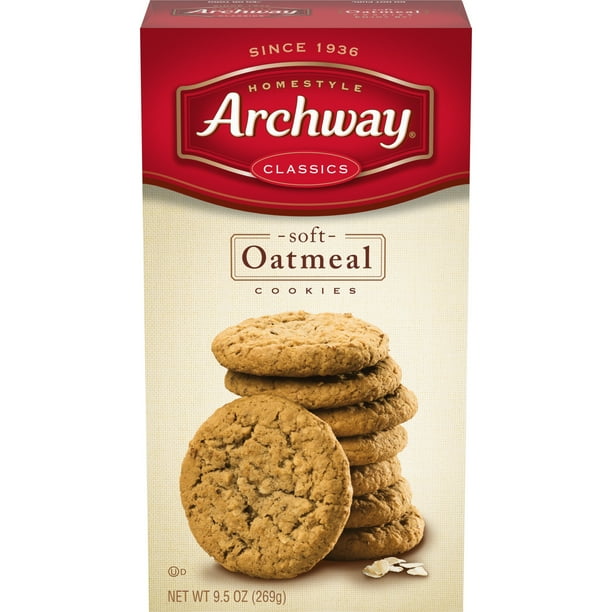
Archway

Archway

If you want an oatmeal cookie with the nostalgia of cookies from grandma’s house, then Archway is a great choice. Around since 1936, this brand is known for bringing home-style taste to store-bought cookies.

Moreover, these aren’t just a basic oatmeal cookie. These soft and mildly sweet oatmeal cookies get an extra boost of sweetness with a drizzle of icing. The perfect choice for those who love a distinctly sweet cookie.

Find these cookies on Amazon or look for them in some grocery stores across the country.


Lil’ Dutch Maid

Lil’ Dutch Maid

For those who prefer to eat your cookies with milk, check out Lil’ Dutch Maid oatmeal cookies. These cookies have the perfect texture for taking a bit with a sip of milk or even for dunking.

This brand focuses on making cookies from recipes handed down over the generations. Providing a homemade taste that is full of classic flavors.

These are also one of the best-priced oatmeal cookie brands on the market. Not only are they available on Amazon, but you can even find these at the Dollar Store! Even if they don’t end up being your favorite oatmeal cookies for a dollar they are worth a taste.


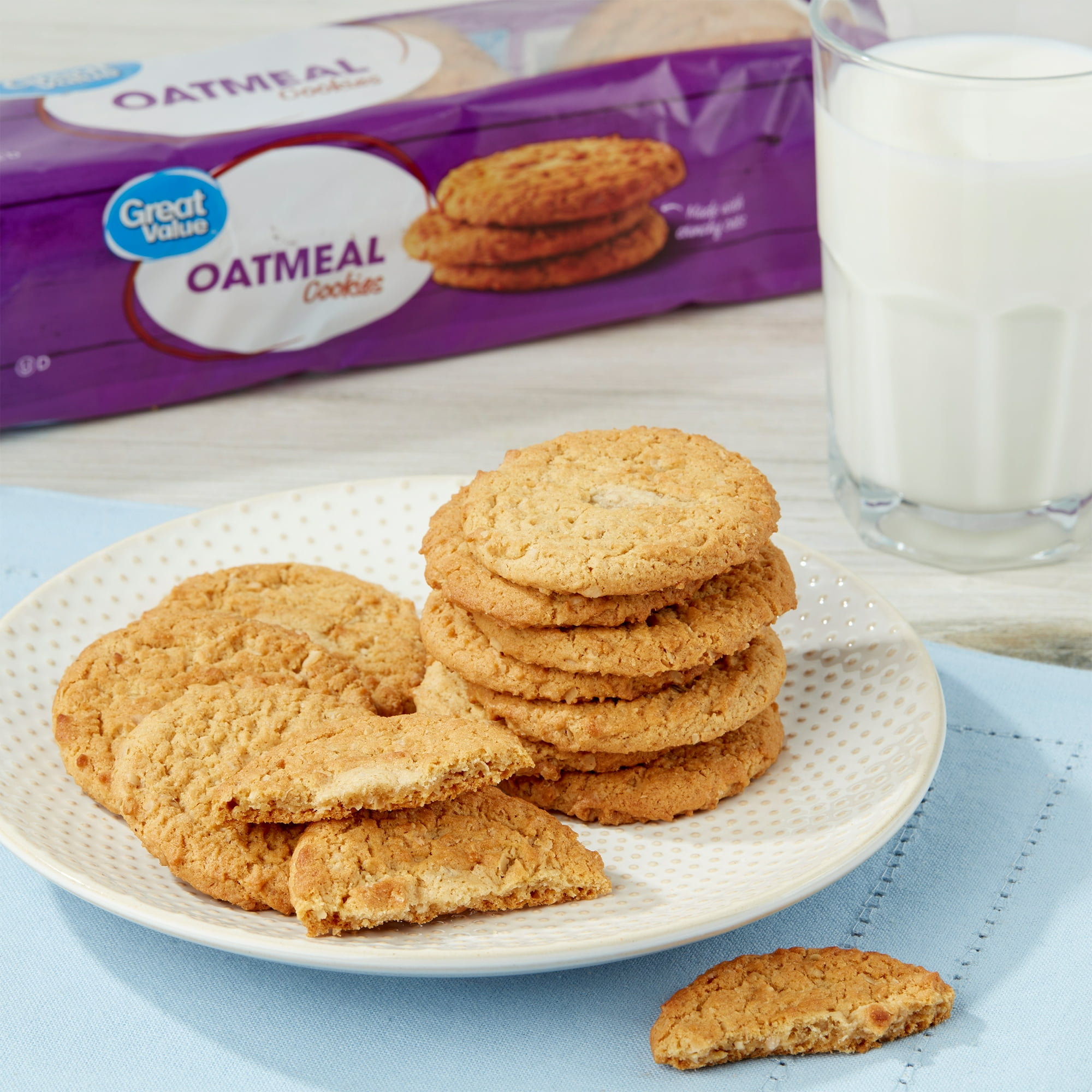
Great Value

Great Value

Although not quite as inexpensive as the Lil’ Dutch Maid cookies you can find at the Dollar Store, Great Value by Walmart also has an inexpensive oatmeal cookie option.

These oatmeal cookies are made with crisp oats. Therefore, they have a harder texture compared to softer cookies. This makes them a wonderful choice for enjoying as a sweet treat with coffee or a cold glass of milk.

If you prefer a softer cookie, you can still enjoy this brand of oatmeal cookies. Many customers suggest letting these oatmeal cookies sit out for a day or two to naturally soften up. A great way to get two textures from one cookie for a great price!

Since Great Value is a Walmart label, you can only find these cookies at Walmart.


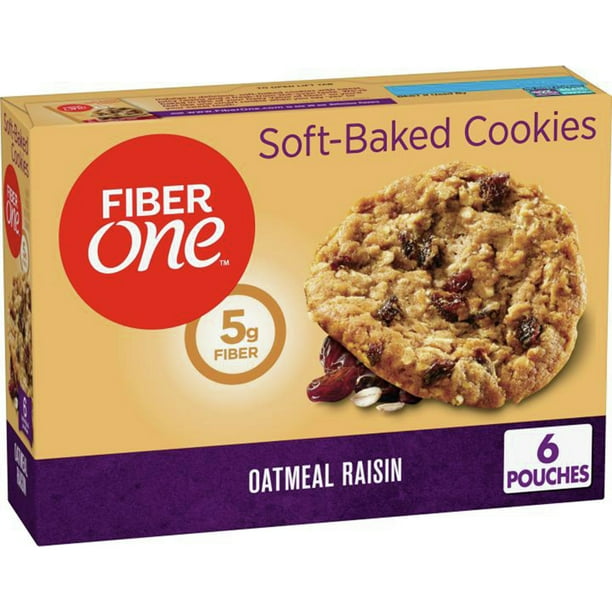
Fiber One

Fiber One

When it comes to cookie choices, it makes sense to think of oatmeal cookies as the healthier choice. Packed with nutritious oatmeal, they provide the added benefits of fiber that other cookies may not.

To really feel good about the nutritional value of an oatmeal cookie though, reach for one by Fiber One. These soft oatmeal raisin cookies provide you with not only great taste and texture but 20% of your daily fiber intake.

Look for a box of these easy-to-grab individually packaged cookies at your local grocery store. You may also find them at Walmart or online.


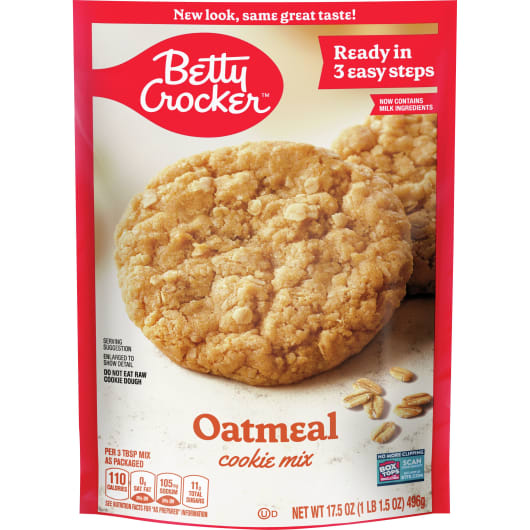
Betty Crocker

Betty Crocker

If you want the taste of warm cookies fresh out of the oven but without the hassle of making them from scratch, then Betty Crocker is the brand for you.

Betty Crocker cookie mixes are easy to prepare in minutes. All you need is butter, water, and eggs. Add those to the cookie mix and stir. Very little measuring or mess to worry about.

Even though you can prepare them in minutes, these cookies bake up just as if you had spent extra time making them from scratch, just like homemade oatmeal cookies that are soft, chewy, and full of flavor.

In addition to a classic oatmeal cookie mix, you can also choose an oatmeal chocolate chip mix. There are also plenty of ways to boost both of these mixes. Consider adding raisins to the classic mix or nuts to the chocolate chip one. Tons of options to get your perfect oatmeal cookie.

As one of the most popular brands in the baking world, Betty Crocker Oatmeal cookie mixes are easy to find in most grocery stores. They are also available at Target and Walmart and even on Amazon.


Nabisco

Nabisco

As a leader in snack foods, it is no surprise that Nabisco makes a tasty oatmeal cookie with flavor that stands out. This brand’s Oatmeal Raisin cookies have a lovely crispy texture for those who love a cookie with crunch.

Each cookie provides a nice raisin flavor but without large pieces of raisin. Therefore, making these a perfect choice for those who like the added sweetness of raisins but not the texture.

As expert snackers, Nabisco knows that one cookie is often not enough, so they provide 2 cookies in each single serving package.

With so many things to love about this brand, they often sell out. Therefore, while you can find these on Amazon, they may not be available at the time you need to order. If they are not available online, keep an eye out for them at your local grocery store.


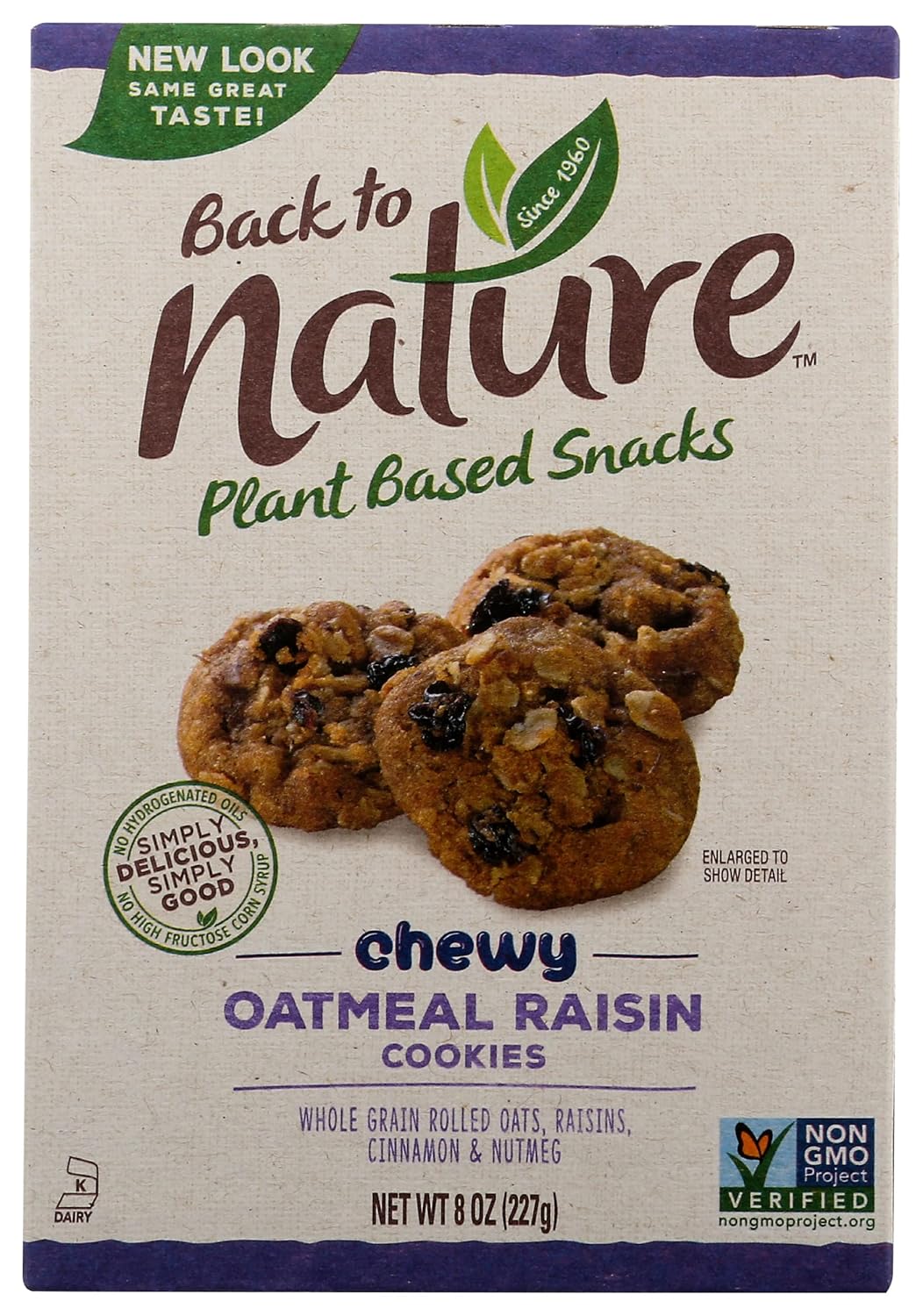
Back to Nature

Back to Nature

Back to Nature is a plant-based brand that is focused on creating delicious snack foods with quality ingredients. This means using only Non-GMO ingredients and focusing on whole grains.

This quality comes through in all of Back to Nature’s cookies – including its Crispy Oatmeal Granola Cookie. Customers love the fresh flavor and crispy texture of these cookies. 

While these are available for purchase online they are often sold out. Therefore, you may have better luck looking for these at your local grocery store.


Effies

Effies

Effies is a brand that started with one woman’s desire to share her culture with her new community. Effie MacLellan was originally from Nova Scotia. When she moved to Dorchester, Massachusetts, she brought with her a family recipe for oatcakes.

Today these oatcakes are still made using a fourth generation recipe. Somewhere between a cookie and a cracker, they have a delicious crumbly texture of toasted oats with a rich buttery flavor and a hint of salt.

While not a traditional oatmeal cookie, these oatcakes will give you all the flavor and texture you need to satisfy a craving. Moreover, they are perfect for pairing with sweet and savory spreads. Add a spread of jam or chocolate to create a decadent oat treat.

These delicious oatcakes can be ordered directly from the company website

Oatcakes – Effie’s Homemade (effieshomemade.com)


Nairn’s

Nairn’s

Nairn’s is a brand that has been around since 1896. Founded in Scotland, this bakery brand is known for its traditional oat biscuits (and oatcakes).

Unlike a classic oatmeal cookie in the United States, oat biscuits are crumblier. They have a texture more similar to an English tea biscuit rather than a cookie. However, despite the difference in texture Nairn’s oat biscuits have a wonderful rich flavor that still satisfies a sweet tooth.

The brand also provides a wide range of flavors to satisfy anyone’s taste buds.

  • Chocolate Orange
  • Dark Chocolate & Mint
  • Salted Caramel
  • Dark Chocolate Chip
  • Coconut & Chia
  • Mixed Berries
  • Stem Ginger

Moreover, Nairn’s also offers gluten-free oatcakes. Providing a delicious sweet treat without any wheat. For a sweet craving without the gluten, reach for Nairn’s Original Oaties or Oaties Choc Chip.

In addition to the sweet taste of the brand’s Oaties and oat biscuits, you can also choose from a wide array of savory oatcakes. While not what you may typically think of when searching for an oatmeal cookie, these savory oatcakes are a delicious alternative when you are in the mood for something less sweet.

Nairn’s is a brand most commonly sold in the UK. However, they do export their goods to other countries, including the United States. Therefore, you can find their oat biscuits and oatcakes in some Walmart stores and on Amazon.


Conclusion

Whether you decide to try a new spin on an oatmeal cookie with an oat biscuit or to stick with the classics, keep this list handy, so you can always find a perfect oatmeal cookie for any craving.

If you like this guide, please share it with your friends and family! And if there are any oatmeal cookie brands that we missed, let us know! We love hearing from our readers, and we’re always looking for ways to improve our guides.

Until next time, keep eating oatmeal cookies and being the best version of yourself!

497 Creative Ideas for Cookie Business Names

1221 Food Business Name Ideas That Nobody Can Resist

23 Voice Shopping Statistics To Get In On The Action 2026


Voice Shopping Statistics

Ready to get your voice shopping on? You’re in luck because we’ve got a list of voice shopping statistics that’ll help you understand the landscape of this exciting new technology and make informed decisions about your business.

If you’re a business owner or marketer trying to figure out how you can capitalize on the growing trend of voice shopping, you’ll get to know exactly who’s doing it and why!

Voice shopping is becoming more popular every day, but that doesn’t mean it’s easy to find relevant statistics. We know how frustrating it can be to find information on something as important as voice shopping and how easy it is to get lost in the noise online. That’s why we’ve done all the hard work for you by compiling a list of voice shopping statistics—all in one place!

Right now, you’re probably wondering:

  • How many people are using voice search?
  • What are they looking for?
  • How much money is being spent?

We’ve got the answers you need. Whether it’s about customer satisfaction, demographics, or market trends, we’ve got you covered.

With this information at your fingertips, you can confidently approach this new technology with confidence and start making more informed decisions about how your business will incorporate it into its operations.

Voice Shopping Statistics (The Highlights)

  • 44.4% of US voice assistant users say they use voice shopping to browse for new products.
  • 45.8% of Americans agree that the biggest advantage of voice shopping is that it is done hands-free.
  • 37.9% of consumers say they have made purchases of between $20 and $50 through voice shopping.
  • 80% of US consumers who have made a purchase using their voice assistant are satisfied with it.
  • 9% of users say they have purchased new products on their smart speaker.
  • 80% of smart speaker owners who heard an ad on their device agree that advertising on smart speakers is innovative.

General Voice Shopping Statistics

1. 27.2% of US consumers say they have tried or are likely to try out voice shopping.

The statistics reveal that the interest in voice shopping among Americans has increased since 2018, when only 11.6% of them said they have used or are likely to use it.

But what exactly is voice shopping? It’s when you use your voice to order products from your phone or other smart devices, like Google Home or Amazon Alexa.

You can ask for anything from a specific brand to just generic items. For example, you could say, “Alexa, I want paper towels” and that would give you a list of recommendations based on what you’ve bought in the past and other information about your preferences. It’s exciting because it can make the process of buying things much more convenient—you don’t have to type in anything!

The awareness of its existence has also increased, as only 9.4% of people say they don’t know what voice shopping is. Their percentage in 2018 was much more considerable at 26.2%.

However, at the same time, the percentage of people who are unlikely to use voice shopping has also increased from 62.2% in 2018 to 63.4% in 2021.

(Voicebot AI)


2. 17.5% of all US consumers have used voice to make at least one purchase.

Historical data suggests that the number of consumers who used their voice to make a purchase has more than doubled in the span of three years. In 2018, only 8.2% of the US adult population had experience with voice shopping.

In raw figures, there were 20.5 million Americans with voice shopping experience in 2018, while their number increased to 45.2 million by 2021, which is a 120% growth.

(Voicebot AI)


3. 5% of American adults engage in voice shopping on a regular basis.

Voice shopping is a new way to shop, and it’s growing in popularity every day.

About 5 percent of Americans are regular voice shoppers, according to a recent survey conducted by Bizrate Insights. That means that 1.65 million Americans are using their voices to buy stuff they need, want, or love.

That’s an impressive number, and it’s even more impressive when you consider that this is only the beginning of a new trend in e-commerce.

Voice shopping isn’t just for purchases, though: it can also be used for finding out information about products or services that you’re considering buying or for asking questions about them.

Voice assistants are becoming more sophisticated every day, making it possible for consumers to navigate their way around a store and order products directly from their homes or cars without ever having to pick up a phone or open an app.

(Insider Intelligence, Bizrate Insights)


4. 51% of US adults have not tried or do not plan to try voice shopping.

It’s no secret that the world of shopping is changing. With the rise of mobile devices and the proliferation of voice assistants like Alexa and Siri, consumers are increasingly comfortable with buying things online using their voices.

Despite the fact that voice shopping is one of the fastest-growing trends in e-commerce, over half of US adults haven’t tried or aren’t planning to try voice shopping. This could be because people are worried about security, privacy, and the lack of control they may have over their data if they use voice assistants.

While no study has been done yet on the topic, it’s likely that the number of people who do use these assistants are more comfortable with them now than they were when these assistants first came out.

(Insider Intelligence)


5. 44.4% of voice assistant users in the US say they use voice shopping to browse for new products.

While browsing is the most popular voice shopping activity, 34.1% of users also use it to perform a search on products. In addition, 30.3% say they use the voice shopping feature to create shopping lists, 28.2% use it to search for product reviews, and 24.2% actually use it to purchase products.

Furthermore, 21.5% use voice shopping to compare prices, 21.2% to set purchase reminders, and 17.7% use it to reorder past purchases. A significantly smaller portion of users, or 13.9%, use it to complete saved transactions, while just 11.4% say they use it to make impulsive purchases.

(Statista)


6. Tracking the location of a package is the most important shopping-related task 65% of US consumers use their voice for.

In addition, 62% use their voice assistants to check the shipping or delivery status of their orders, 58% search for more information about a product or a service, and 57% use them to find answers to common questions.

The most recent voice assistant stats further reveal that 55% of the consumers use their voice to review or confirm an order, while 54% check the price and availability of a product or service using their voice. Just over a half, or 52%, use voice assistants to inquire about promotional offers and discounts.

Finally, 49% use them to make comparisons between multiple products, and an equal percentage use their voice to inquire about locations and working hours of retail stores and restaurants.

(Vixen Labs)


7. The biggest advantage of voice shopping is that it is done hands-free, according to 45.8% of Americans.

A recent survey conducted with voice assistant users and nonusers reveals that 37.2% of Americans appreciate the time efficiency of voice shopping. Moreover, the fact that it’s always on and allows multitasking is cited as an advantage by 29.3% and 27.1% of the responders.

Other popular voice shopping benefits include automatic reminders, cited by 17.4%, user habits analyses by 13%, and personalized shopping experience, cited by 11.3% of Americans.

(Coupon Follow)


8. Data security risk is the biggest drawback of voice shopping, according to 33.1% of US consumers.

However, the stats show that a larger percentage of nonusers, or 47.3%, are concerned with data security, while only 27.2% of actual voice assistant users consider this a drawback.

Additionally, 31.7% of consumers cite data tracking as voice shopping’s biggest disadvantage. Even though the fact that it is always on is cited as a benefit by some consumers, there are also 24.4% who view it as a drawback. Similarly, 23.4% of them consider its ability to learn the user’s routine a disadvantage.

Furthermore, the lack of visual browsing is cited as a drawback by 22.5% of the consumers, 20.8% say they have voice recognition issues, and 14.3% view having to speak aloud as a disadvantage.

(Coupon Follow)


9. 40% of voice shoppers have used voice shopping to purchase groceries.

Most Popular Product Categories in Voice Shopping

The above figure makes groceries the most commonly used voice shopping category in the USA, followed by everyday household items, which have been bought by 37.6% of the consumers.

Additionally, close to a third, or 32.2% of voice shoppers, used their voice to order apparel items, 23.4% purchased consumer electronics, and 18.1% ordered digital content such as music and movies using voice assistants.

(Voicebot AI)


10. 34.1% of American voice assistant users have purchased groceries using voice shopping.

While the largest portion of voice assistant users has used the voice shopping feature to purchase groceries, there are also 28% who used to buy electronics and 27% who voice shopped for personal care items.

Furthermore, 24.8% purchased clothing items, 21.8% household products, and 18.8% bought pet supplies using the voice shopping feature on their assistant.

Finally, 16.7% say they used the feature to purchase gifts, and 15.4% used it to buy home goods and furniture.

(Coupon Follow)


11. 37.9% of consumers say they have made purchases of between $20 and $50 through voice shopping.

The above price range is the one the largest portion of online shoppers say they have experience with, while 26% say they have purchased items worth up to $20 using their voice.

Moreover, 21.91% have bought items costing between $51 and $100, and almost the same percentage, or 21.9%, made a purchase worth between $101 and $200.

The statistics show that voice shopping is not commonly used for larger purchases, as only 5.9% of the consumers say they have made an order of over $200 using their voice.

(Voicebot AI)


12. 80% of US consumers who have made a purchase using their voice assistant are satisfied with it.

Of them, 39% shared this positive experience with their friends and family, and an equal percentage shopped with the same retailer again. Additionally, 36% report that their opinion of that retailer has improved, and 24% say they spent more money with it after their pleasant voice shopping experience.

However, a significant portion of consumers doesn’t trust their voice assistants enough to use them for shopping. Namely, 45% of them don’t feel comfortable sending payments through them, while 46% don’t trust voice assistants to interpret and process their orders correctly.

(PWC)


Smart Speaker Owners Voice Shopping Statistics

13. 26% of smart speaker owners have made at least one purchase using their voice.

According to a recent survey, 11.5% of smart speaker users use the voice shopping feature on a monthly basis, while 2.1% say they use it daily.

The statistics also show that Google Home users are more likely to voice shop, as 36.8% of them have used their smart speakers for this purpose. On the other hand, only 23.3% of Amazon Echo owners have made a purchase using their voice.

However, since Amazon Echo has a considerably larger user base, the people who have used it to make a voice purchase account for almost two-thirds, or 63.6%, of the total number of smart speaker voice shoppers, while Google Home users account for 32.7%.

(Voicebot AI)


14. 9% of users say they have purchased new products on their smart speaker.

Additionally, 12% say they have reordered previously purchased products, while 13% used their voice to order digital content, such as movies, TV shows, and music.

Smart speaker usage statistics further reveal that 14% of users used their voice to add items to cart but then finalized the transaction on a different device.

According to the stats, asking for product information and recommendations is the most commonly used smart speaker shopping activity, with 22% of the users saying they have done it before.

(Insider Intelligence)


15. 80% of smart speaker owners who heard an ad on their device agree that advertising on smart speakers is innovative.

If they were granted the ability to interact with ads they hear on their smart speakers using their voice, 33% of smart speaker owners say they are very likely to add the advertised item to their shopping cart. 32% say they are somewhat likely, while 35% are not likely at all to do the same.

Additionally, 33% say they are very likely to request more information about the product to be sent to them, 37% say they are somewhat likely, and 30% are not likely at all.

(National Public Media)


16. Voice shopping through a smart speaker is the favorite method of shopping for only 1.8% of US consumers.

The traditional method of in-store shopping remains the preferred method of buying things for the vast majority, or 48.5%, of Americans. Furthermore, 31.7% favor shopping on a website, while 15.7% prefer shopping on their mobile device.

However, the latest stats show a 31% rise in consumer interest in using voice shopping while shopping in a physical store in the last three years. Namely, in 2018, 47.8% of consumers stated they are open to using voice assistants while shopping in-store, while their percentage in 2021 increased to 62.6%.

(Voicebot AI)


Voice Shopping Demographics

17. Only 2% of female US consumers regularly use voice shopping.

In addition, 7% of adult women in the US say they have used voice shopping before but are not regular users, and another 7% say they haven’t used it before but are very interested in trying it out.

Furthermore, 21% of them say they have never voice-shopped before and are only somewhat interested in trying it out, while 55% haven’t used voice shopping and have no intention of trying it out.

Lastly, 8% of female consumers in the US don’t know what voice shopping is.

(Insider Intelligence)


18. 8% of American men say they use voice shopping regularly.

The stats further reveal that an additional 12% of male US consumers have tried voice shopping before but don’t use it every day, while 10% have never used it but are very interested in trying it out.

Moreover, 17% have never voice-shopped before and are very interested in trying it out, while 47% have never tried it and have no interest in trying it out in the future as well.

Finally, 7% of American men don’t know what voice shopping is.

(Insider Intelligence)


19. 9% of American consumers between the ages of 18 and 34 are frequent users of voice shopping.

According to the statistic above, US consumers from the youngest age group are the most common users of voice shopping. Interestingly, with 10%, they are also the age group with the largest percentage of people who never heard of it.

In comparison, only 5% of Americans aged between 35 and 54 regularly use voice shopping, while 6% say they don’t know what it is.

US consumers over 55, on the other hand, are the age group who uses voice shopping the least, with only 2% and 7% of the oldest Americans say they don’t know what voice shopping is.

(Insider Intelligence)


20. 45% of Millennials say they use voice assistants for shopping-related activities.

While not all of them use them for direct voice shopping purchases, they still make use of their voice assistants for searching for products and customer reviews.

Google’s Assistant is the most popular for shopping-related activities among Millennials, with 24% of them saying they prefer it. Apple’s Siri is preferred by 19%, Amazon’s Alexa by 18%, and Microsoft’s Cortana is only favored by 5% of them.

(Coupon Follow)


21. 10% of male smart speaker owners have purchased a new product through their smart speaker devices.

Statistics show that female users are slightly less likely to buy products with their voice on their smart speaker, as the percentage of women who have done so is 8%.

Furthermore, men are also more likely to reorder products they have bought before (14% vs 11%) and order digital content (16% vs 12%) on their smart speakers than women.

Female smart speaker owners are more likely to add items to their cart using their voice and finish the transaction on another device (15% vs 11%) and slightly more likely to inquire about product info and recommendations (23% vs 21%) on their smart speakers than male users.

(Insider Intelligence)


22. 24% of smart speaker owners in the 35 to 54 age group have used their smart speakers to request product recommendations or more info.

In comparison, 19% of smart speaker users aged between 18 and 34 and 21% of those older than 55 have used their smart speakers for this task.

The 35 to 54 age group also has the highest percentage of users who used their smart speakers to add items to cart and finish processing their order on a different device, with 18%. The percentage of users aged 18 to 34 who have done this is 15%, while only 7% of users older than 55 have shopped this way.

An equal percentage of 14% of users in both the 18-34 and 35-54 age brackets have used their smart speakers to order digital content, while the share of users over 55 who have done this is 12%.

(Insider Intelligence)


23. 15% of smart speaker users between 18 and 34 have used their smart speakers to reorder an item they purchased before.

The youngest smart speaker owners are the age group most likely to use their smart speakers for this activity, while 12% of those aged between 35 and 54 and 11% of those over 55 have done the same.

They are also the group that is the most likely to purchase a new product through their smart speakers, with 17%, while only 7% of smart speaker owners between 35 and 54, and just 5% of those older than 55 have shopped like this.

(Insider Intelligence)


Conclusion

We know that voice shopping is still in its infancy, but we also know that it will grow rapidly over the next few years. As it does, we’ll see more and more companies investing in this technology—and more consumers looking for ways to access their favorite brands through voice shopping.

If you’re interested in getting started with voice shopping or improving your current strategy, we hope you’ve found this blog useful. We’re excited to see what the future holds for this space, and we’ll be back with more updates as things progress.

We are always looking to improve our content, so if there’s anything you would like us to cover in a future blog post, please let us know via email.

If you found this article helpful at all, please share it with your friends, family, and colleagues – they’ll thank you for it!

Thanks for reading!

545 Shopping Slogans and Taglines To Help Sell Anything

20 Exciting Augmented Reality In Ecommerce Statistics

19 AI In Ecommerce Statistics That Will Blow Your Mind

25 Mind-Blowing eCommerce Conversion Rate Statistics

Sources

How Does Tripadvisor Make Money? Business Model of TripAdvisor


How Does Tripadvisor Make Money

Tripadvisor is a popular online travel guidance platform that hosts user-generated reviews of hotels and tours. Travelers can book hotel rooms, restaurant seats, and flights on TripAdvisor.

Tripadvisor primarily makes money via click-based advertising. The company also makes money on subscription-based advertising, display-based advertising, experiences, dining, rentals, and ticket sales.

Founded in 2000 by Stephen Kaufer and Langley Steinert, Tripadvisor started as a vertical search engine for travel locations. In 2004, Expedia acquired Tripadvisor for $210 million. Then in 2011, Expedia spun out Tripadvisor as an independent company.[1]

Later in the same year, Tripadvisor launched its IPO, which was valued at $4 billion.[2] This showcased how much the business had grown since its acquisition by Expedia in just seven years. To date, Tripadvisor has acquired 30 organizations, with its most recent purchase being SinglePlatform in 2019.[3]

What is Tripadvisor & How Does It Work?

Tripadvisor is an online travel advisor platform that hosts user-generated reviews for hotels, tourism sites, local attractions, and more. Anyone can make a free account on Tripadvisor and post a review, with photos and their personal experience. The review can be for an existing page, or a new venue that is yet to be listed on Tripadvisor.

In total, there are over one billion reviews for eight million businesses.[4] Venues are rated on a scale from one to five stars, and contextually recommended to relevant users with the help of an algorithm. Tripadvisor automatically narrows down the list of locations based on a user’s preferences.

Then, it provides them with the most relevant reviews for each venue within that location. Tripadvisor also provides booking services for hotels, flights, B&Bs, restaurants, vacation rentals, and more. The company is partnered with several booking firms that provide Tripadvisor customers with better rates and special offers.

To use Tripadvisor, customers create a free account. An email address, username, and password are all that is required for this process. Then, they can use the various networking and booking services available through the platform

Users can view hotels, vacation rentals, local attractions, restaurants, tours, and more for any given location. Tripadvisor is currently available in 48 countries and supports 28 languages. Because of this, users can browse through a wider range of reviews.

Reviews are posted by both solo and group travelers who visit a location at different times of the year. Customers can narrow down reviews by visit type, time of stay, and venue features. The massive userbase of Tripadvisor ensures that reviews can be found for all relevant locations within any given area of a country.

In 2019, there were over 5.2 million restaurant listings on the platform. And over 1.4 million hotel listings.[5] Each listing contains an average rating, a phone number, booking options with the lowest prices, and photos.

Venues can be saved for future trips and shared with contacts. Amenities such as parking, free Wi-Fi, pools, and meals are listed alongside the reviews. Tripadvisor also lists special features and highlights for each location so potential customers can distinguish between similar hotels and restaurants.

Users can interact with the community by visiting travel forums that are sorted by country and theme. Tripadvisor also contains reviews and bookings for cruises and vacation packages. If a user wants to hire a professional trip designer, they can also do so on Tripadvisor.

Trip designers are recommended based on the travel location. They are experts on local cuisine, art, culture, and history. Users can chat for free with a trip designer to understand what is being offered and whether the designer is a good fit.

To hire a trip designer, users pay a $199 fee. Then, the designer will craft a custom itinerary that includes pre and post-trip planning. During the process, customers will stay in touch with their trip designer to customize the details of their plan and share important documents.

Tripadvisor’s comprehensive suite of services makes it a one-stop solution for travelers around the world. Venue selection, trip planning, hotel reservations, and tours can all be arranged from a single app. The platform also functions as a social networking spot for like-minded travelers who wish to discuss locations and share exciting news.

Each user has a public profile. It contains their review history, photos, contributions, travel map, follower list, and more. Discerning travelers in need of specific information can choose to chat privately with a reviewer using direct messages.

Tripadvisor also publishes yearly Traveler’s Choice awards with reviews of the best spots and activities. These include beaches, restaurants, guided tours, and more. The company rewards users based on the number of locations they visit and reviews they publish.

With this strategy, Tripadvisor boosts social engagement and fosters a highly active community. According to a 2019 report, they received 460 million visitors on the website from around the globe.[6] Reviews are thoroughly scanned by both automated and manual processes to remove fraudulent or paid content.

A recently published transparency report showed that Tripadvisor had to remove 943,205 fraudulent reviews in 2020. This accounted for 3.6% of the total reviews submitted that year. Tripadvisor claimed that 67.1% of the paid or fake reviews were caught by its automated moderation algorithm before making it onto the platform.[7]

Paid reviews have been a consistent source of trouble for Tripadvisor. Their platform thrives on the principle of providing free and unbiased information to travelers. This means the company has to spend a considerable amount of time and money on technologies to moderate reviews that compromise its integrity.


Business Model of Tripadvisor

Tripadvisor follows a business-to-consumer (B2C) model. Their platform is free to use and attracts a huge pool of users who visit the app for its reviews. All content is generated by users who write long-form reviews with detailed insight into key features of travel locations.

When customers click on the booking option for a restaurant or hotel, they’re redirected to the website for that business. Tripadvisor gets a commission from hotel chains and tourism companies for each customer it brings to them. Advertisers from travel agencies, cruises, and airlines buy ad spots on a cost-per-mille (CPM) basis.

There are three key components within the Tripadvisor business model- customers, venues, and advertisers. Customers are acquired through an organic process that involves the use of a basic search engine like Google for travel planning. Since Tripadvisor is the world’s most popular travel advisory site, it usually shows up at the top of recommendations.

From there, users can create an account and browse through the catalog of services offered by the site. They can browse reviews, post comments on forums, and create their own reviews. Customers can also book flight tickets and hotel reservations for venues through advertising partners.

A growing customer base drives more reviews and engagement, drawing in even more visitors. This creates value for advertising and booking partners. These partners drive traffic to restaurants and hotels.

It is a mutually beneficial cycle for all three parties involved. Unlike traditional online travel advisors, Tripadvisor differentiates itself by offering exclusively long-form reviews. By providing travelers with all the information they need, Tripadvisor transforms a high percentage of visitors into paying customers.

Visitors feel more confident booking a room or trip on Tripadvisor after reading a detailed review. These reviews are often backed by photographs and a direct message option. By offering an end-to-end solution for travelers, Tripadvisor caters to a broader section of the market.

The company also offers value to its customers by displaying the best prices and a wide selection of venues. Hotels, restaurants, and tourist companies receive a reliable advertising channel with high-value leads. Advertisers get the opportunity to drive traffic to their websites through Tripadvisor’s booking system.

Based on the amount of traffic it generates, Tripadvisor is the number one travel and tourism site. It also attracts a high percentage of female users, who make up over 52% of all users. On desktop, people within the age group of 25 to 34 make up 27.7% of Tripadvisor’s userbase, its largest demographic.[8]

Combined with the high percentage of female users, this indicates that the site is quite popular among couples. It is also a great resource for young families looking to go on their first vacation. When people have a positive experience with their first Tripadvisor journey, they’re more likely to leave a high rating.

In 2020, 65.8% of all reviews had a five-star rating. Only 7.2% of users felt unsatisfied and gave a one-star rating.[9] A high user satisfaction rate coupled with organic advertising through search results makes Tripadvisor an excellent choice for advertisers and venues.

Over 78% of all Tripadvisor traffic is driven by search engines such as Google.[10] The remaining traffic is provided by direct visits, referrals, and social media. Tripadvisor also has a diverse revenue mix, with revenue generated from a wide variety of direct and indirect sources.

Tripadvisor’s biggest rival is Expedia, as they offer similar services. However, Expedia contains a mix of snippets, short reviews, and long-form reviews. In contrast, Tripadvisor is exclusively focused on long-form reviews with an average character count of 688 for accommodations.

Longer reviews result in a higher likelihood of the user booking accommodations. This is based on a survey done by Tripadvisor. In the survey, 68% of participants mentioned that they were more likely to make a purchase after reading a long review.[11]

Expedia is ideal for bundle bookings in which the hotel reservation, car rental, and flight are all packaged into one purchase. Comparatively, Tripadvisor offers better deals on solo bookings that involve only one service. Tripadvisor also has better search and filtration systems to help users find the exact type of accommodation they’re looking for.

Booking.com is another Tripadvisor competitor and gets a high amount of monthly traffic. But it doesn’t cover the same range of services as Tripadvisor, being limited to hotel and restaurant bookings. Yelp is also a competitor with a similar user-generated review system, but it’s primarily targeted at local foodies and shoppers rather than travelers.

Tripadvisor has significant costs associated with its business model. In 2021, the company generated a total revenue of $902 million. It also spent $1 billion on operating and revenue costs.[12]Sales and marketing cost $469 million. Technology and content development took up $212 million. General and administrative costs accounted for a further $167 million.[13]


How Does Tripadvisor Make Money?

Tripadvisor makes money from seven different revenue streams. These include click-based advertising, subscription-based advertising, display-based advertising, experiences, dining, rentals, and ticket sales.

In its annual reports, the company splits its revenue into two segments. The first segment is ‘Hotels, Media & Platform.’ The second segment is ‘Experiences & Dining.’

The ‘Hotels, Media & Platform’ segment includes revenue from click-based advertising, subscription-based advertising, and display-based advertising. Commissions-based revenue from third-party booking and dining services are included within the ‘Experiences & Dining’ segment.

In 2021, the company made $549 from its hotels, media & platform segment. Which is 60.8% of the total revenue. It also made $307 from its experiences & dining segment.[14]

Finally, Tripadvisor makes money from sales of car rentals, airline tickets, cruise trips, and property rentals. The sales from these rentals and ticket sales aren’t reported. Tripadvisor classifies them as ‘Other’ income sources in its annual report.

‘Other’ revenues added up to $46 million, or 5% of the total revenue in 2021. In total, Tripadvisor made $902 million in 2021.[15]

Click-Based Advertising

Click-based advertising is the largest source of advertising revenue for Tripadvisor. Every venue on Tripadvisor has a booking option with the best prices and reservation dates listed next to it. Whenever a user clicks on this option, they are taken to a booking partner’s website or app.

Online travel advertisers and booking partners pay Tripadvisor on a cost-per-click (CPC) basis. The CPC rate is determined beforehand through an auction process. In which partners place bids for links that will take Tripadvisor visitors to their booking platform.


Subscription-Based Advertising

Subscription-based advertising is a unique business-to-business (B2B) style advertising system. Partners buy subscriptions that allow them to customize their page information. This can include things like phone numbers, details, special offers, and tourist attractions.

It is not clear how much Tripadvisor charges for these subscriptions.


Display-Based Advertising

Display-based ads are primarily used by airlines, cruises, and destination marketers. These are sold on a cost-per-thousand-impressions (CPM) basis. Brands use these to shape their image and boost their popularity.

Tripadvisor does not list how much it charges for this kind of advertising.


Experiences

When users click on the ‘Things to Do’ tab, they are shown a collection of activities and tours. Unlike hotel and restaurant bookings, these bookings are done directly within Tripadvisor. Instead, Tripadvisor earns a referral commission from tour providers and hotels for every booking secured on its site.

Referral commission amounts likely vary depending on the agreement negotiated with the particular activity or tour provider.


Dining

Users who reserve a seat in a restaurant through Tripadvisor pay a transaction fee. Tripadvisor collects a transaction fee for each seat reserved. It also offers subscription-based advertising and reservation management services to restaurants that want access to market analytics.

It is unclear how much the company makes from either of these forms of revenue.


Rentals

Tripadvisor users can rent cars, condos, villas, and beach properties through the platform. The company has rental agreements with property owners and rental companies and collects a commission for each booking.

Tripadvisor does not state how much they charge in commissions for these kinds of bookings.


Ticket Sales

Whenever a customer books a flight or cruise trip on Tripadvisor, they are directed to the website of the airline or cruise company. Tripadvisor collects both click and display-based advertising revenue from their airline and cruise partners.


Tripadvisor Funding, Valuation & Revenue

Tripadvisor (TRIP) is currently a public company trading on the NASDAQ exchange. The company launched its IPO in 2012 at a price of $26 per share for a valuation of $4 billion.[16] As of September 2022, the company’s stock traded for just over $24 at a valuation of $3.4 billion.

Prior to going public, the company went through two funding rounds and raised a total of $3.3 million. Tripadvisor’s latest funding round was a post-IPO equity round in 2021 that raised $300 million. Notable Tripadvisor investors include TCV and OneLiberty Ventures.[17]

Tripadvisor was not profitable in 2020 and 2021. This is almost entirely because of a decline in the travel and tourism market caused by the pandemic and does not necessarily indicate long-term financial or profitability issues.

In 2021, the company’s total revenue was $902 million. A 49% year-over-year (YoY) uplift from the $604 million it made in 2020.[18] This indicates that Tripadvisor is recovering from the temporary decline it suffered in 2020.

YearTotal RevenueNet Income
2019$1.5 billion$126 million
2020$604 million($289 million)
2021$902 million($148 million)


Is Tripadvisor Profitable?

Tripadvisor has not been profitable for the last two years, owing to a decline in travel market activity caused by the pandemic. But the company is on track to post profits in 2022, judging by their Q2 2022 report. This shows that Tripadvisor made a net income of $31 million from a quarterly revenue of $417 million.[19]

Compared to 2021, the company has boosted its second-quarter income by 77.4%.[20]

Tripadvisor is focusing on its experiences and dining revenue streams that are part of the company’s core business model. Combined with an increase in ad revenue from travel bookings, the company is very likely to be profitable again in the near future.


Conclusion

TripAdvisor has made a name for itself as one of the most popular travel websites in the world. It’s a great way for travelers to find out about restaurants, hotels, and attractions in their destination city.

However, it’s important to note that TripAdvisor is not just a website—it’s an entire ecosystem of products and services that help people plan their trips and get the most out of their vacation experience.

As you can see, TripAdvisor has come up with a unique way to make money out of its users’ travel experiences. It’s a model that works well for the site’s users, businesses, and investors.

The business model is simple: they provide a platform for people to share their experiences with others, who can then use those experiences to make their own decisions about where to go on vacation. They also provide this service at no cost to their users, which makes it appealing to everyone involved.

It is not just travelers who use TripAdvisor, though. Businesses also use TripAdvisor to get feedback from their customers, which helps them improve their services or products. This can be really useful if you are looking for a new hotel or restaurant and want to know more about other people’s experiences there before booking yourself.

If you’ve ever used TripAdvisor before, you know how helpful it can be when planning your next vacation—which is why TripAdvisor has been so successful in making money!

655 Amazing Travel Agency Name Ideas Ever

475 Vacation Captions for Instagram That Look Epic

How Does Yelp Make Money? Business Model of Yelp

Sources

  1. Harvard Business Review
  2. Financial Times
  3. Crunchbase
  4. Tripadvisor
  5. Statista
  6. Tripadvisor
  7. Tripadvisor
  8. Similarweb
  9. Tripadvisor
  10. Similarweb
  11. Tripadvisor
  12. SEC
  13. SEC
  14. SEC
  15. SEC
  16. Financial Times
  17. Crunchbase
  18. SEC
  19. Tripadvisor
  20. Tripadvisor
X